Introduction: When a Single Outbreak Can Destroy Years of Work
Imagine waking up to find your cattle or poultry showing signs of disease. Within days, your animals are gone — and with them, your entire income. It’s a nightmare no farmer wants to experience. Yet, animal diseases like foot-and-mouth, avian influenza, or brucellosis can devastate even the most careful livestock producers.
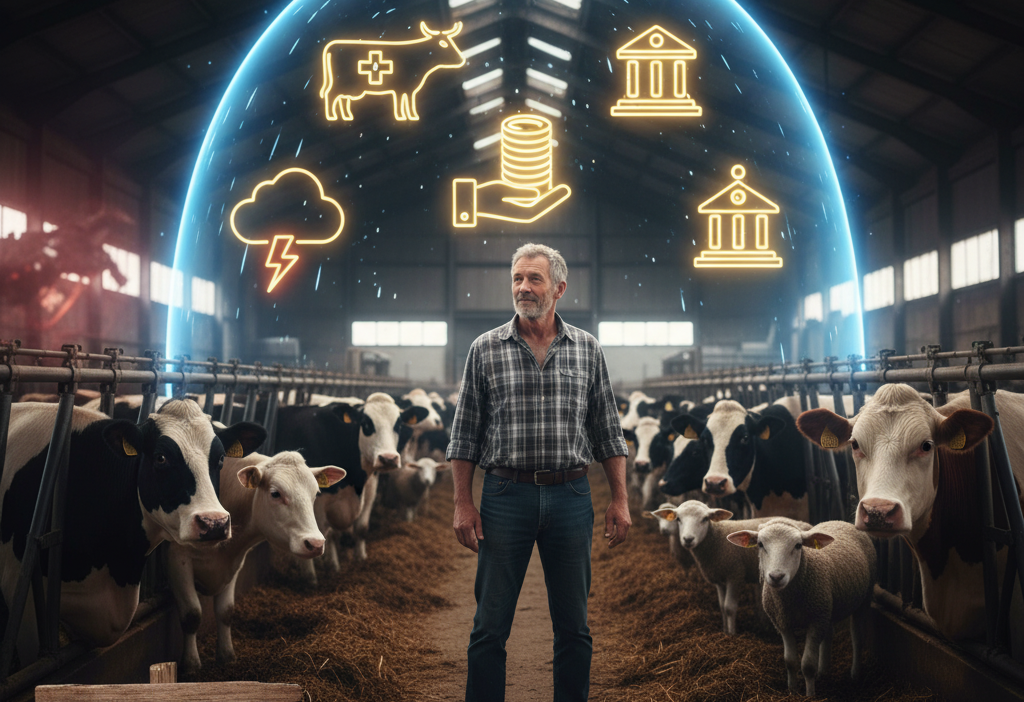
That’s why livestock disease insurance for farmers exists — a crucial financial shield that covers losses from disease outbreaks. In an era where climate change and global trade increase infection risks, understanding this insurance type can mean the difference between recovery and ruin.
What Is Livestock Disease Insurance?
Livestock disease insurance is a specialized form of agricultural insurance that protects farmers against economic losses caused by the death, slaughter, or quarantine of animals due to infectious or contagious diseases.
Unlike general livestock insurance, which covers accidents or natural disasters, disease insurance specifically targets illnesses verified by veterinary authorities. For example, if your farm faces an outbreak of avian flu or foot-and-mouth disease, the insurance helps reimburse the value of lost animals, disinfection costs, and sometimes even business interruption.
In many countries, governments or cooperatives partner with private insurers to create hybrid programs that share the risk — ensuring farmers get affordable premiums and quick compensation.
Why Farmers Need Livestock Disease Insurance
Animal health is directly tied to financial health. Disease outbreaks don’t just affect one farm; they ripple through entire rural economies. When disease strikes:
- Production stops instantly. Milk, meat, or egg output plummets.
- Trade restrictions apply. Export bans can last months, crippling revenue.
- Culling costs escalate. Farmers must dispose of animals safely, often at their own expense.
A single outbreak can erase profits from several seasons. With livestock disease insurance, farmers regain stability. The policy doesn’t just replace lost animals; it restores operational confidence. Knowing that financial recovery is guaranteed allows producers to plan ahead, reinvest, and protect community food supply chains.
Think of it as a “safety vaccine” for your business — one that immunizes your finances against biological uncertainty.
How Coverage Works
A livestock disease insurance policy typically outlines specific diseases covered, compensation terms, and claim procedures. Here’s how it usually works:
- Policy Setup: The farmer lists all insured animals by species, breed, age, and identification tag.
- Coverage Scope: Common covered diseases include foot-and-mouth disease, brucellosis, anthrax, avian influenza, swine fever, and rinderpest.
- Verification Process: Veterinary authorities inspect and confirm any outbreak before a claim is filed.
- Compensation: Payments may include the market value of lost animals, disposal costs, disinfection, and sometimes productivity loss.
- Exclusions: Non-infectious diseases, negligence, or lack of vaccination records usually aren’t covered.
Some advanced programs use index-based coverage, where payouts are automatically triggered by regional outbreak data rather than individual farm reports — speeding up the claim process significantly.
Cost and Compensation Calculation
The cost of livestock disease insurance depends on several factors:
- Type of Animal: High-value livestock like dairy cows or breeding bulls have higher premiums.
- Number of Animals: Bulk policies can reduce per-animal cost.
- Disease Risk Level: Regions prone to outbreaks face higher rates.
- Preventive Measures: Farms with strict biosecurity or vaccination protocols enjoy discounts.
Premiums often range from 1% to 5% of the insured animal’s value. For instance, if a farmer insures 50 cows worth $2,000 each, the total premium might be around $5,000 per year. But in the event of an outbreak, compensation could reach ten times that amount.
Governments in many countries subsidize part of the premium — sometimes up to 70% — to encourage participation and prevent large-scale agricultural losses.
How to Choose the Right Insurance Provider
Selecting the right livestock disease insurance provider is as critical as choosing the right feed or veterinarian. Farmers should evaluate insurers based on:
- Experience and Reputation: Choose companies with proven track records in agricultural claims.
- Coverage Flexibility: Policies should adapt to different species and disease profiles.
- Claim Efficiency: Look for insurers with transparent, fast payout systems.
- Partnership with Authorities: Providers that coordinate with veterinary departments ensure smoother verification.
- Subsidy Integration: Check whether the insurer participates in government-subsidized programs.
Before signing, always read the fine print. Ask what’s excluded, how deductibles work, and whether you’re covered for emergency culling or disposal costs. A good rule: if something seems unclear, clarify it before it becomes a problem.
Conclusion
Livestock farming will always carry biological risk. But financial destruction doesn’t have to be part of that equation. By investing in livestock disease insurance for farmers, producers safeguard not only their animals but also their livelihoods, families, and future operations.
In a world where one microscopic virus can halt entire economies, livestock insurance isn’t a luxury — it’s a necessity. Protecting your herd today ensures that tomorrow’s food supply remains strong, stable, and sustainable.
Sıkça Sorulan Sorular (FAQ)
1. What diseases are usually covered under livestock disease insurance?
Common ones include foot-and-mouth, anthrax, avian influenza, swine fever, and brucellosis.
2. How are insurance premiums calculated?
Based on animal type, health history, region, and biosecurity standards of the farm.
3. Can small-scale farmers apply for livestock disease insurance?
Yes. Many governments and cooperatives provide subsidized policies for smallholders.
4. Does insurance cover preventive vaccination costs?
Generally no, but maintaining vaccination records can lower premium costs.
5. How do I make a claim after an outbreak?
Notify your insurer and local veterinary authority immediately, provide proof of diagnosis, and complete the required claim forms.