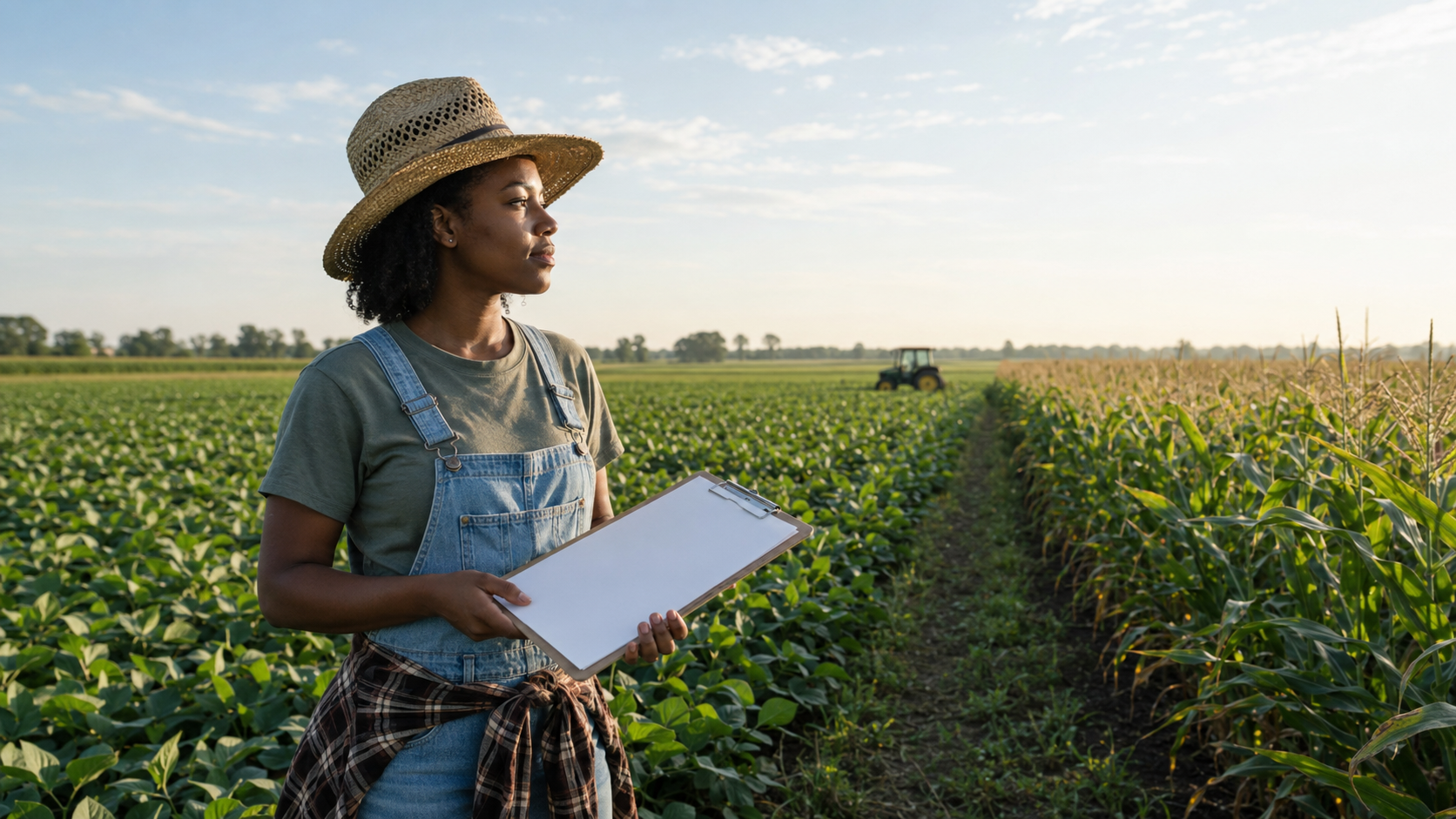
Farming has always been at the mercy of the weather. A few weeks of drought, unexpected frost, or heavy rainfall can turn a profitable season into financial hardship. To address this, governments and insurers worldwide introduced Weather-Based Crop Insurance Schemes (WBCIS) — policies designed to compensate farmers for weather-related losses, not yield loss directly.
In 2026, weather-based crop insurance has become a key tool for agricultural risk management, helping millions of farmers secure their income against climate unpredictability. This guide breaks down how WBCIS works, what it covers, and why it’s becoming an essential part of modern farming.
What Is Weather-Based Crop Insurance (WBCIS)?
Weather-Based Crop Insurance is a type of agricultural insurance that provides financial protection to farmers based on weather conditions rather than actual crop yield.
Instead of measuring how much the farmer harvested, this insurance monitors weather parameters like rainfall, temperature, humidity, and wind speed through reliable data sources such as Automatic Weather Stations (AWS).
If recorded weather deviates beyond a predefined threshold (e.g., rainfall below 60% of normal), the insurance policy automatically triggers payouts — ensuring fast, objective, and transparent compensation.
Objective of WBCIS
- Protect farmers from financial losses due to adverse weather.
- Replace traditional claim-based models with data-driven, objective assessments.
- Encourage wider participation by reducing delays and disputes.
How It Differs from Traditional Crop Insurance
Traditional insurance models, like yield-based schemes, compensate farmers after assessing physical crop loss through field surveys — a process that is time-consuming and often contested.
In contrast, WBCIS focuses purely on weather data, making it faster, more transparent, and easier to administer.
| Aspect | Traditional Crop Insurance | Weather-Based Crop Insurance |
|---|---|---|
| Loss Basis | Actual yield loss | Deviation in weather parameters |
| Data Source | Crop-cutting experiments | Weather station data |
| Claim Settlement Time | Weeks to months | Within days of data verification |
| Dispute Probability | High | Minimal |
| Transparency | Moderate | High |
In short: WBCIS doesn’t measure crop damage — it measures weather deviation that causes the damage.
How the Policy Works
Weather-based crop insurance uses a parametric (index-based) approach. It means that compensation is tied to a specific, measurable weather parameter rather than subjective field reports.
1. Weather Parameters
The most common parameters used include:
- Rainfall (deficit or excess)
- Temperature (high/low)
- Humidity
- Wind speed
- Solar radiation
2. Trigger Events
When a weather event crosses a critical threshold, the insurance activates.
Example:
If rainfall during the sowing phase drops 40% below the regional average, the policy automatically triggers a payout.
3. Data Sources
- Indian Meteorological Department (IMD)
- Private weather agencies
- Satellite imagery and AWS networks
4. Claim Calculation
Payouts are proportional to the level of deviation from the normal parameter range. The higher the deviation, the greater the compensation.
5. Payout Timeline
Since the process relies on real-time data, farmers receive compensation within a few weeks — often before the next cropping cycle.
Eligibility and Coverage
Who Can Apply:
- Small and marginal farmers growing notified crops.
- Both loanee (credit) and non-loanee farmers are eligible.
Crops Covered:
- Kharif crops: Paddy, maize, cotton, groundnut, soybeans.
- Rabi crops: Wheat, barley, mustard, pulses.
- Commercial crops: Sugarcane, coffee, tea, and horticultural crops (region-specific).
Coverage Periods:
- Sowing stage – rainfall deficit.
- Growing stage – prolonged dry spells or high humidity.
- Harvest stage – heavy rainfall or frost damage.
Coverage varies by region and crop type, defined under district-level “notified areas” based on agro-climatic zones.
Premiums, Subsidies, and Benefits
One of the biggest advantages of WBCIS is its affordability, thanks to government subsidies.
Premium Structure:
Farmers pay only a fraction of the total premium cost, while the rest is subsidized by central and state governments.
| Crop Type | Farmer’s Share of Premium |
|---|---|
| Kharif crops | 2% of sum insured |
| Rabi crops | 1.5% of sum insured |
| Annual/Commercial crops | 5% of sum insured |
The remaining amount (up to 90%) is covered by government subsidies, making the policy accessible even for low-income farmers.
Key Benefits:
- Fast and transparent payouts
- Low premium, high coverage
- Encourages financial stability and resilience
- Supports rural credit systems by reducing default risk
- Enhances trust between farmers, insurers, and policymakers
Example:
If a farmer insures ₹50,000 worth of crops under WBCIS for ₹1,000 premium, and a drought reduces rainfall below 50% of average, the farmer might receive up to ₹40,000 compensation — automatically triggered by rainfall data.
Challenges and Future Outlook
While WBCIS has improved insurance accessibility, a few challenges remain:
Challenges:
- Weather Data Gaps: Limited or malfunctioning AWS stations in rural areas.
- Index Mismatch: Sometimes weather station data doesn’t reflect actual on-field conditions.
- Farmer Awareness: Many farmers are unaware of enrollment deadlines or policy mechanisms.
- Claim Delays: Despite automation, administrative approvals can slow disbursements.
Future Developments:
- Satellite-Based Monitoring: Integrating remote sensing for higher accuracy.
- Blockchain Smart Contracts: For automatic claim validation and transparent settlements.
- AI-Driven Risk Prediction: Using predictive analytics to model regional weather trends.
- Mobile-First Enrollment: Simplified digital platforms for instant policy sign-up and tracking.
As climate variability intensifies, these innovations will make WBCIS even more reliable and efficient.
Conclusion: A Safer Future for Farming
In an era of unpredictable climate, Weather-Based Crop Insurance stands as a lifeline for millions of farmers. It replaces uncertainty with assurance — providing compensation when the sky itself turns against them.
By combining data science, satellite technology, and smart policy design, WBCIS ensures that farmers can plan with confidence, recover faster, and continue feeding the world.
Weather may be uncertain, but your future doesn’t have to be.
FAQ
1. What is the main objective of WBCIS?
To provide quick financial relief to farmers facing crop loss due to abnormal weather events.
2. Who is eligible for weather-based crop insurance?
All farmers growing notified crops in participating districts are eligible.
3. How is the claim calculated?
Based on the deviation of actual weather data from the defined threshold.
4. What is the role of the government in WBCIS?
Governments subsidize premiums and oversee implementation through state and national agencies.
5. Is there a mobile app to track claims?
Yes — several countries, including India, offer digital platforms for registration and claim tracking.