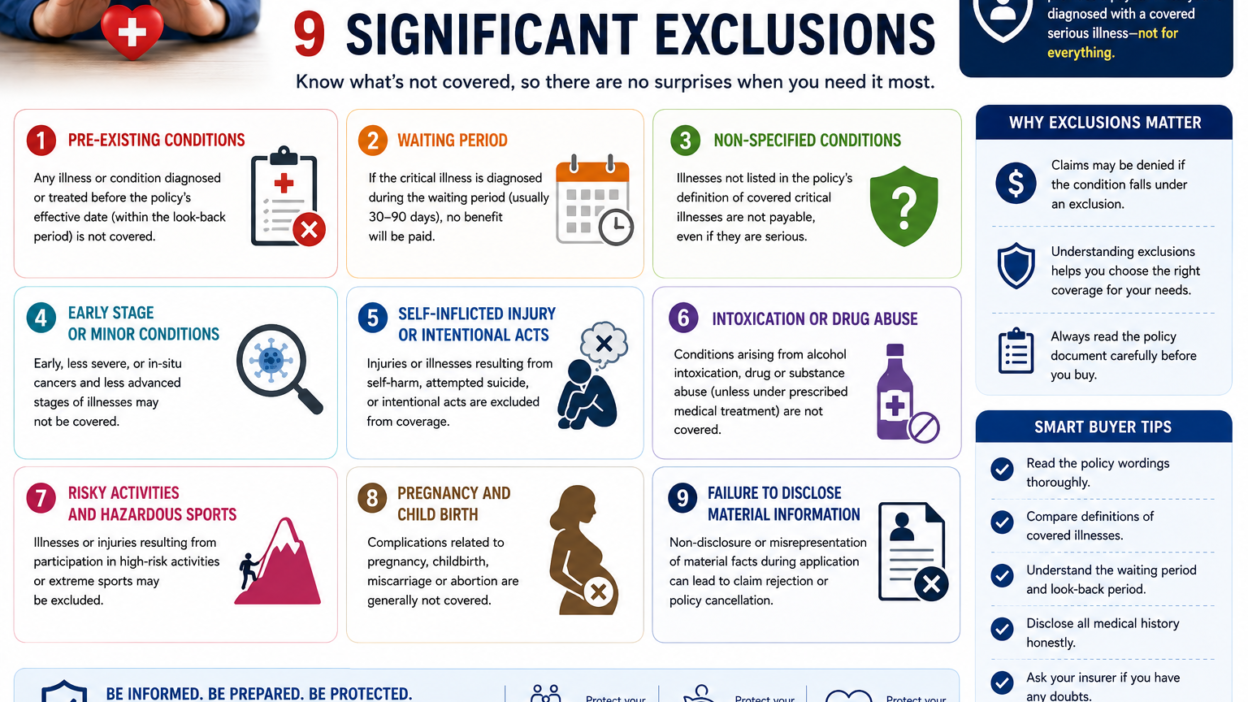
When considering financial protection against severe health challenges, Critical Illness Insurance can offer a vital safety net. It promises a payout upon diagnosis of specific life-threatening conditions, providing peace of mind during times of uncertainty. However, it’s crucial to understand that not all circumstances are covered under these policies. Therefore, buyers must carefully review the exclusions that might limit the policy’s effectiveness. Ignoring these details could lead to unexpected disappointment when it’s needed most. This article will explore nine significant exclusions that potential policyholders should be aware of, ensuring a well-informed decision and better financial security.
Key Points
- Understanding the basic concept of Critical Illness Insurance.
- Discussing common exclusions related to pre-existing conditions.
- Highlighting exclusions for certain illnesses depending on policy terms.
- Examining age-related exclusions that may impact eligibility.
- Considering geographical limitations on coverage.
- Exploring exclusions related to lifestyle choices, such as smoking.
- Identifying waiting periods before coverage takes effect.
- Reviewing exclusions concerning mental health conditions.
- Understanding the implications of false claims or misinformation.
Related content:
How Much Does Crop Insurance Cost Per Acre?
Understanding Critical Illness Insurance: What It Covers
Critical Illness Insurance aims to provide financial support when you face severe health challenges. This type of insurance can be crucial during unexpected moments, as it offers a lump-sum payment to help cover various expenses. However, it often raises questions about its exact coverage and benefits.
Typically, Critical Illness Insurance covers illnesses such as cancer, heart attack, and stroke, but the specifics can vary based on the policy. Therefore, understanding what each plan includes is essential. Some policies may even cover additional conditions like multiple sclerosis or organ failure. Thus, individuals might find it helpful to:
- Review policy documents: Ensure clarity on covered illnesses.
- Consult with an advisor: Get professional advice tailored to personal health needs.
- Assess your medical history: Consider how pre-existing conditions might impact your coverage.
Ultimately, selecting the right plan requires careful consideration and a thorough understanding of what Critical Illness Insurance delivers.
While it offers peace of mind, one should still weigh the potential risks and benefits carefully, as every situation is unique.
The Importance of Reviewing Exclusions in Your Policy
Understanding the exclusions in your policy is essential, as they outline what is and isn’t covered, potentially leaving you exposed during critical times. For instance, if you have Critical Illness Insurance, it’s vital to know that not all conditions are automatically included. Policies can vary widely; some might exclude pre-existing conditions, while others may not cover certain serious illnesses altogether. Critical Illness Insurance might appear comprehensive at first glance, yet a closer inspection can reveal significant gaps. Therefore, regularly reviewing these exclusions allows you to reassess and adjust your coverage as your circumstances change. Particularly, as your lifestyle evolves, what was once adequate could become insufficient. Moreover, being aware of these details aids in making informed decisions, ensuring that you are not caught off guard. In my opinion, proactively addressing these exclusions contributes to overall peace of mind.
Common Exclusions in Critical Illness Insurance: An Overview
When considering Critical Illness Insurance, it’s essential to be aware of common exclusions that might affect your coverage. Many policies do not cover pre-existing conditions, which can lead to surprises if you expect those to be included. Furthermore, specific illnesses listed in a policy may also have waiting periods, meaning you would not receive benefits if diagnosed shortly after taking out the insurance.
Additionally, some policies exclude illnesses caused by risky behaviours, such as substance abuse or extreme sports. These exclusions can significantly impact the overall effectiveness of your Critical Illness Insurance. Therefore, individuals should carefully review their policy details. They may find that while coverage seems comprehensive, certain limitations can leave them vulnerable. In my opinion, understanding these nuances is crucial for anyone pursuing such insurance to ensure peace of mind.
Ultimately, knowledge of exclusions helps policyholders navigate their options with more confidence.
Specific Conditions Often Excluded from Coverage
When considering Critical Illness Insurance, it’s essential to be aware that certain conditions may be excluded from coverage. Insurance policies can vary widely, and while some offer comprehensive protections, others have limitations that leave potential gaps in security.
Generally, the following conditions are often not covered:
- Pre-existing conditions: These are illnesses that existed before the policy was initiated, creating a potential loophole in the insurance safety net.
- Mental health disorders: Such conditions are frequently excluded, which raises questions about the comprehensiveness of mental health support.
- Functional ailments: Chronic issues that do not meet specified criteria for ‘critical’ conditions may fall outside the coverage realm.
Therefore, when opting for Critical Illness Insurance, it’s advisable to read the fine print and fully understand the exclusions. Despite the apparent security offered, many are surprised by the intricacies of their policies.
In my opinion, clearer communication from providers around these exclusions would greatly benefit policyholders and aid in informed decision-making regarding Critical Illness Insurance.
How Your Age Affects Critical Illness Insurance Exclusions
As you age, your health risks typically increase, influencing the Critical Illness Insurance landscape significantly. Insurers often impose different exclusions based on age, reflecting their assessment of your potential health concerns. For younger individuals, premiums are generally lower, and exclusions are less frequent; however, as you enter middle age, conditions like heart disease or certain cancers might lead to stricter terms.
Although many assume that aging alone dictates policy limitations, factors such as pre-existing conditions and lifestyle choices also play a critical role. Therefore, it’s worth considering comprehensive consultations when choosing a policy. Insurers may view a 40-year-old differently than a 60-year-old, yet nuances can vary widely.
Ultimately, understanding how your age affects Critical Illness Insurance exclusions can help you make informed decisions regarding your coverage options. Consequently, staying proactive about your health may mitigate some exclusions, fostering a more positive outlook on your financial protection.
Additionally, being aware of how to navigate these intricacies can be empowering in securing the best possible terms.
Pre-existing Conditions: A Key Exclusion to Watch For
When considering Critical Illness Insurance, it’s crucial to examine the potential impact of pre-existing conditions. Insurers often classify these conditions as significant exclusions, which may affect both your eligibility and policy terms. For instance, a condition diagnosed before the policy’s start date can lead to limited coverage or higher premiums, thereby complicating your financial security.
Understanding Your Options
Therefore, it’s prudent to fully disclose your medical history when applying. Some policies do offer riders or clauses that might mitigate the risks associated with these exclusions. Nevertheless, the specifics can vary greatly between insurers, leaving potential policyholders with a complex landscape to navigate.
“Understanding the nuances of your policy is key to securing your health and financial future.”
Ultimately, ensuring that you have the right protection involves careful consideration of how pre-existing conditions play into your coverage under Critical Illness Insurance.
Navigating Policy Language: Understanding Terms and Conditions
Understanding the terms and conditions of an insurance policy can often feel like deciphering a foreign language. Many individuals overlook the nuances that could significantly impact their coverage. As you embark on this journey, it’s crucial to pay attention to specific details, especially when it comes to Critical Illness Insurance.
Key concepts to consider include:
- Definitions: Terms like “pre-existing conditions” or “waiting periods” can affect how your Critical Illness Insurance operates.
- Exclusions: Some policies may not cover certain illnesses, leading to potential financial strains when you need assistance the most.
- Claims process: Understanding how to effectively file a claim can be a game-changer in accessing your benefits promptly.
Therefore, navigating these intricacies not only empowers you but also ensures that you make informed decisions, ultimately safeguarding your well-being in times of uncertainty. However, despite the complexity, familiarising yourself with these aspects of Critical Illness Insurance offers peace of mind in the long run.
The Role of Comprehensive Policy Reviews in Ensuring Coverage
Comprehensive policy reviews serve as a pivotal mechanism in ensuring adequate coverage, especially within the realm of Critical Illness Insurance. By regularly assessing existing policies, individuals can identify potential gaps that may leave them vulnerable during critical times. These reviews often highlight changes in personal circumstances, such as new health developments or shifts in family dynamics, which can necessitate adjustments in coverage levels.
In my opinion, proactive engagement in these reviews strengthens one’s financial security. However, many people overlook them, assuming once they have coverage, it will remain adequate indefinitely. This complacency can lead to unwarranted surprises. Therefore, it’s essential to address these crucial evaluations at regular intervals, ensuring that the policy remains aligned with not just current needs but also future uncertainties. Ultimately, the goal is to navigate life’s unpredictabilities with robust protection from services like Critical Illness Insurance.
In conclusion, comprehensive policy reviews are not merely beneficial; they are, in many cases, a necessity.
Making Informed Choices: Tips for Selecting the Right Critical Illness Insurance
Selecting the appropriate Critical Illness Insurance can feel overwhelming, yet it’s vital for your peace of mind. Start by assessing your individual health risks and financial situation. This will help you understand the coverage needed and ensure you’re not underinsured. Research different policies and consider the specific illnesses covered. Some plans focus on a narrow range, while others provide broader protection; thus, clarity is crucial. Additionally, pay attention to the terms surrounding claims and waiting periods, as these can vary dramatically. Furthermore, consider the insurer’s reputation for customer service; after all, support during a critical time is invaluable. However, it’s essential to balance premium costs with the level of coverage. Ultimately, you want a policy that offers security without causing financial strain. In summary, take your time to compare options and seek expert advice when necessary. Finding the right Critical Illness Insurance can safeguard your future.
You can also check these out.:
Critical Illness Insurance Plans
Conclusion
In summary, exploring the intricacies of Critical Illness Insurance sheds light on its vital role in safeguarding your financial health during challenging times. This type of coverage offers peace of mind, knowing that you have a safety net in case of unforeseen health issues. Although some might hesitate to invest in it, the potential benefits can far outweigh the costs, especially when it comes to protecting loved ones and maintaining stability. Therefore, considering this insurance option is a proactive step toward securing your future. Ultimately, being well-informed empowers you to make decisions that support both your wellbeing and financial resilience.
Frequently Asked Questions
What is critical illness insurance?
Critical illness insurance is a policy that provides a lump sum payment if you are diagnosed with a specified serious illness covered by the policy, such as cancer, heart attack, or stroke.
Do I need critical illness insurance?
Whether you need critical illness insurance depends on your personal circumstances, such as your health, financial situation, and whether you have other insurance coverage.
What illnesses are typically covered by critical illness insurance?
Typical illnesses covered include cancer, heart attack, stroke, multiple sclerosis, and organ failure. However, coverage can vary between policies.
How does critical illness insurance differ from life insurance?
While life insurance pays out a benefit upon the policyholder’s death, critical illness insurance pays out a lump sum if you are diagnosed with a specific critical illness.
Can I claim if I have a pre-existing condition?
Most policies will have exclusions for pre-existing conditions, meaning you may not be able to claim for any illnesses that you were already diagnosed with before taking out the policy.
How much critical illness insurance do I need?
The amount of coverage you may need will depend on your financial obligations, such as mortgage payments, living expenses, and any debts you may have.
Is critical illness insurance worth it?
Critical illness insurance can provide financial security during a challenging time, but it’s important to weigh the costs against your individual risk and needs.
What is the waiting period for claims?
Most critical illness insurance policies have a waiting period, typically ranging from 14 to 30 days after diagnosis, before a claim can be made.
Can I get critical illness insurance if I am over a certain age?
Yes, but the availability and cost of coverage may change based on your age and health status. Insurers often have age limits for new policies.
How can I choose the right critical illness insurance policy?
Consider factors such as the illnesses covered, premium costs, payout amounts, and any exclusions or limitations before deciding on a policy.