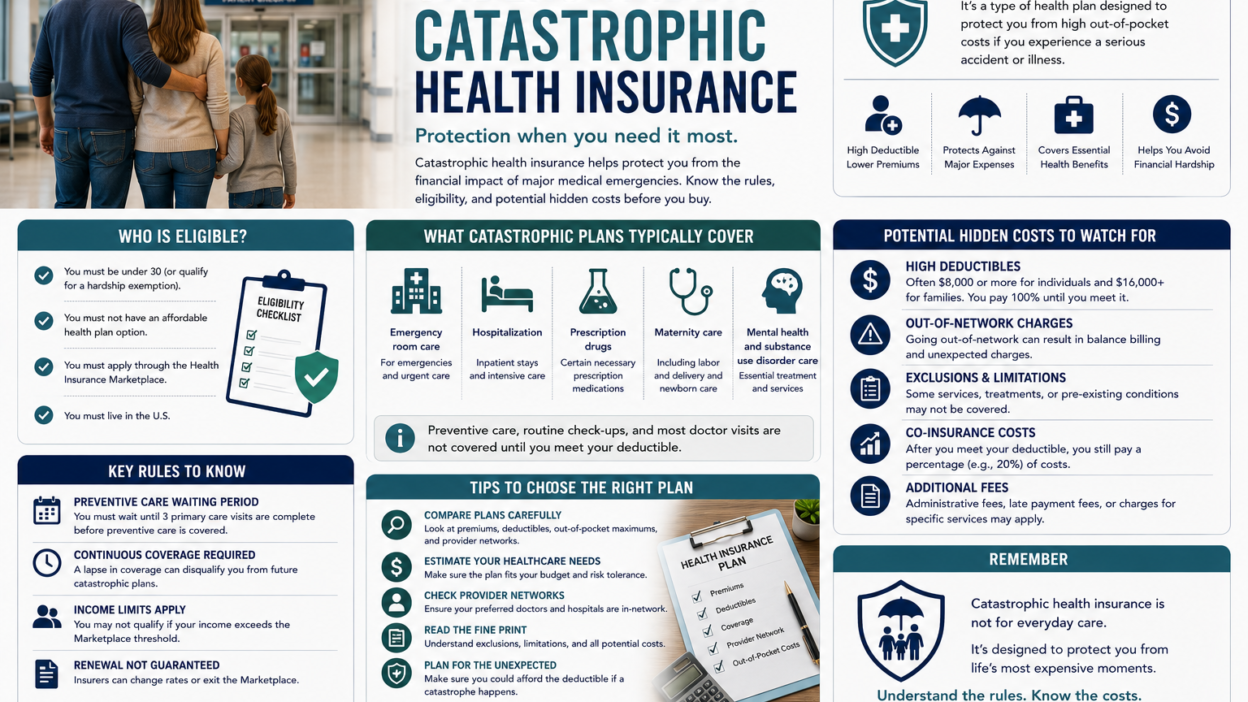
Understanding the intricacies of Catastrophic Health Insurance can be daunting, especially when considering eligibility criteria and potential hidden costs. This form of coverage serves as a financial safety net for unexpected medical emergencies. However, it’s essential to navigate its rules carefully, as they can significantly impact your access to comprehensive healthcare while ensuring you remain financially protected.
Key Points
- Eligibility requirements vary by state and require individuals to meet specific criteria.
- This insurance primarily covers serious health events after a high deductible is met.
- Monthly premiums are generally lower compared to other plans, but out-of-pocket costs can be high.
- Preventive services are often covered without deductibles; however, not all treatments may qualify.
- Some plans may impose restrictions on which providers you can visit.
- Understanding hidden costs is vital for long-term financial planning.
- It’s essential to compare options and estimate potential expenses before choosing a plan.
Understanding Catastrophic Health Insurance: What It Is and Who Needs It
Catastrophic Health Insurance is designed for those who seek a safety net against high medical costs without the burden of comprehensive coverage. Typically characterised by low premiums and high deductibles, it can seem appealing. However, it may not be suitable for everyone. Therefore, it’s vital to comprehend the circumstances under which these plans become beneficial. Here are some factors to consider:
- Age: Young adults often benefit from minimal coverage yet still want to protect against major expenses.
- Health Status: Those in good health might find this option fitting, while individuals with ongoing conditions may require more extensive plans.
- Financial Situation: Evaluate whether you can afford high out-of-pocket costs in case of a significant health event.
Ultimately, Catastrophic Health Insurance could serve certain individuals well, but understanding its limitations is crucial.
Key Eligibility Criteria for Catastrophic Health Insurance Plans
To qualify for Catastrophic Health Insurance plans, applicants usually must be under 30 years old or possess a hardship exemption. These plans are designed to provide coverage primarily for worst-case scenarios, ensuring financial protection during significant health events. However, understanding the exact criteria can sometimes be unclear because they may vary based on state regulations. Moreover, enrollees need to ensure they meet income requirements to prevent unexpected costs that could arise from choosing this type of coverage.
The Fine Print: Common Hidden Costs in Catastrophic Health Insurance
When considering Catastrophic Health Insurance, it’s essential to delve into the often-overlooked expenses. For instance, while premiums may seem low, high deductibles can lead to significant out-of-pocket costs. Additionally, services such as preventive care might not be fully covered, raising concerns about unexpected bills. Therefore, evaluating these potential hidden costs ensures you’re prepared for the financial implications of relying on Catastrophic Health Insurance. It’s prudent to scrutinise every detail.
Comparing Catastrophic Health Insurance with Other Coverage Options
When evaluating health insurance choices, Catastrophic Health Insurance often stands out due to its unique structure. It typically features lower premiums and higher deductibles, mainly catering to those who wish to shield themselves from severe financial burdens. However, other options, like comprehensive plans, may offer broader coverage and lower out-of-pocket expenses. Therefore, it’s crucial to consider your health needs and financial situation. In essence, contrasting these plans can illuminate their respective advantages.
How to Navigate the Enrollment Process for Catastrophic Health Insurance
Navigating the enrollment process for Catastrophic Health Insurance can seem daunting. Start by understanding the eligibility requirements, as they may vary slightly depending on your circumstances. Research available plans carefully, since benefits and premiums can differ widely. Moreover, consider key enrollment periods; missing them could limit your options. Once you select a plan, gather necessary documentation to expedite your application. This way, you can ensure that your transition to Catastrophic Health Insurance is smooth and efficient.
Real-Life Scenarios: When Catastrophic Health Insurance Makes Sense
Catastrophic Health Insurance is particularly beneficial for young, healthy individuals who rarely require medical care. Consider a freelance graphic designer who faces an unexpected accident. In such cases, they might find themselves in extensive medical debt without insurance. Therefore, a high-deductible plan can provide a safety net, ensuring catastrophic events don’t lead to financial disaster. However, it’s crucial to weigh the risk versus potential savings, as this type of insurance may not suit everyone’s needs.
“Insurance is about protection; it’s what you don’t plan for that matters most.”
Tips for Maximizing Benefits and Minimizing Costs with Catastrophic Plans
Understanding how to effectively utilise Catastrophic Health Insurance can lead to significant savings and peace of mind. To maximise benefits while containing costs, consider implementing the following strategies:
- Routine Care: Regular check-ups might seem unnecessary, but they can help catch issues early.
- Network Providers: Use in-network services to reduce out-of-pocket expenses.
- Emergency Preparedness: Have a plan for emergencies that includes understanding your deductible limits.
By carefully navigating these aspects, you can ensure your Catastrophic Health Insurance coverage remains beneficial when you need it most, despite potential uncertainties associated with high deductibles.
In conclusion, embracing a proactive approach towards Catastrophic Health Insurance will empower you to make informed decisions that can lessen financial burden.
Conclusion
In summary, understanding Catastrophic Health Insurance is crucial for anyone seeking to navigate the complexities of medical coverage. This type of insurance offers a safety net for unforeseen health crises while encouraging individuals to take charge of their day-to-day health expenses. Although it may not be the most comprehensive option, it serves as a practical solution for those looking to protect themselves against significant financial burdens. Therefore, weighing the benefits and limitations of this coverage can empower individuals to make informed choices that align with their unique needs and circumstances. Ultimately, being well-informed paves the way for better health decisions and financial security.
Frequently Asked Questions
What is catastrophic health insurance?
Catastrophic health insurance is a type of health coverage designed to protect you from very high costs in the event of a serious illness or accident. It typically has low monthly premiums and high deductibles.
Who should consider catastrophic health insurance?
Catastrophic health insurance is ideal for young, healthy individuals who want to safeguard themselves against significant medical expenses while keeping monthly premium costs low.
What does catastrophic health insurance cover?
Catastrophic health insurance generally covers essential health benefits, including emergency services, hospitalisation, and preventive services. However, it is important to check specific policy details for coverage limits.
Are preventive services covered under catastrophic plans?
Yes, catastrophic health insurance plans must cover preventive services without charging a copayment or coinsurance, as long as you receive these services from an in-network provider.
How do I enrol in a catastrophic health insurance plan?
You can enrol in a catastrophic health insurance plan during the open enrollment period or a special enrollment period through the Health Insurance Marketplace or directly through an insurance provider.