Farm insurance can cover a farm residence, household belongings, barns, agricultural structures, machinery, livestock and liability exposures. Depending on the policy, it may also protect stored products, supplies, loss of farm income and additional operating expenses following a covered event.
However, there is no single farm insurance policy that automatically covers every agricultural risk. Coverage must be selected according to the farm’s buildings, equipment, animals, business activities and visitors.
Crop failure, commodity price declines, employee injuries, commercial vehicles, flooding and pollution may require separate policies or endorsements.
Key Takeaways
- Farm insurance combines personal and commercial protection for agricultural property.
- A policy may cover the farmhouse, barns, machinery, livestock and farm liability.
- Buildings and equipment may need to be individually listed or included under a blanket limit.
- Farm insurance does not ordinarily replace federal crop insurance.
- Flood, earthquake, equipment breakdown and pollution are commonly excluded or limited.
- Agritourism, farm stands and custom farming should be disclosed to the insurance provider.
- Coverage depends on the declarations, policy forms, endorsements, limits and exclusions.
What Is Farm Insurance?
Farm insurance, also called farmowners or farm and ranch insurance, is designed for properties where residential and agricultural business activities occur together.
An ordinary homeowners policy protects a residence and personal activities. It is not designed to cover the barns, machinery, livestock, products, employees and commercial liability risks associated with an operating farm.
Farm insurance bridges this gap by combining selected elements of:
- Homeowners insurance
- Commercial property insurance
- Inland marine coverage
- General liability insurance
- Business interruption insurance
- Agricultural endorsements
The National Association of Insurance Commissioners describes farmowners insurance as property and liability coverage recognizing that residential and business exposures are intertwined on agricultural properties.
The exact coverage varies by insurance company and state. The policy’s declarations and endorsements determine what is actually insured.
Farm Dwelling Coverage
A farmowners policy may cover the primary residence located on the insured farm.
Dwelling coverage can apply to the physical structure of the home and permanently attached components, including:
- Walls and roof
- Built-in cabinets
- Heating and cooling systems
- Plumbing
- Electrical systems
- Attached garages
- Covered porches
- Permanently installed fixtures
The policy may protect the residence against listed causes of loss such as fire, lightning, wind, hail or vandalism. Covered causes vary by policy form.
Farm dwelling coverage should not be confused with coverage for barns or commercial agricultural structures. Those buildings may need to be listed separately.
Household Personal Property
Farm insurance may protect personal belongings kept inside the insured residence.
Examples include:
- Furniture
- Clothing
- Appliances
- Electronics
- Kitchen equipment
- Personal tools
- Household supplies
Business property and farm equipment may not qualify as household personal property. A laptop used primarily for farm accounting, for example, may be subject to a business-property limit.
Farm owners should separate personal property from agricultural business property when creating an insurance inventory.
Additional Living Expenses
If a covered event makes the farmhouse temporarily uninhabitable, the policy may pay additional living expenses.
Covered costs could include:
- Temporary housing
- Additional food expenses
- Laundry
- Storage
- Necessary transportation
- Other reasonable increases in living costs
Payments are normally subject to a time limit and dollar limit. They cover additional expenses rather than every normal household expense.
Barns and Agricultural Buildings
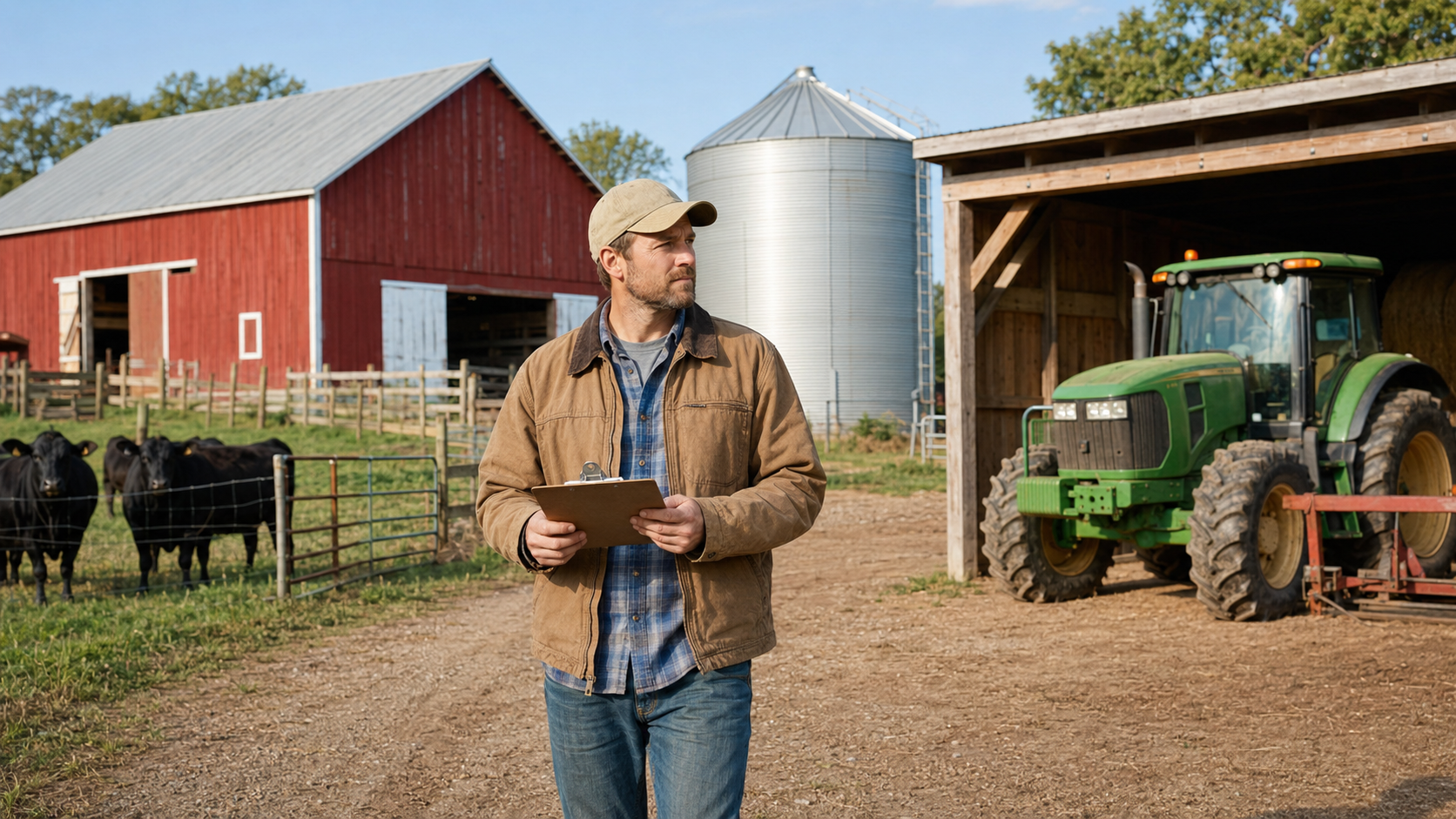
Farm insurance can cover barns and other structures used in agricultural operations.
Buildings may include:
- Livestock barns
- Equipment sheds
- Machine shops
- Garages
- Grain bins
- Silos
- Hay storage buildings
- Greenhouses
- Poultry houses
- Milking facilities
- Fences
- Farm offices
- Roadside stands
Every structure should be described accurately. The insurer may need information about its construction, age, condition, use, square footage and replacement value.
A building used for livestock can present different risks from one used only for machinery storage. Changing a building’s use without informing the insurer may create a coverage problem.
Replacement Cost vs. Actual Cash Value
The valuation method determines how a covered property loss is calculated.
Replacement Cost
Replacement cost coverage is generally based on the cost of repairing or replacing damaged property with materials of similar kind and quality, subject to policy terms and limits.
Depreciation is not normally deducted from the final covered replacement cost, although the insurer may initially pay an actual cash value amount until repairs are completed.
Actual Cash Value
Actual cash value generally considers depreciation.
An older barn with a replacement cost of $200,000 may have a significantly lower actual cash value because of age, condition and remaining useful life.
Choosing actual cash value can reduce premiums but may leave the owner without enough money to rebuild after a major loss.
Farm owners should verify the valuation method separately for dwellings, barns, machinery and other property.
Farm Machinery and Equipment
Farm insurance may cover machinery and equipment against specified causes of physical loss.
Property can include:
- Tractors
- Combines
- Harvesters
- Planters
- Balers
- Sprayers
- Irrigation equipment
- Portable generators
- Farm tools
- GPS equipment
- Farm computers
- Livestock handling equipment
Coverage can be written on a scheduled or blanket basis.
Scheduled Coverage
Scheduled coverage lists specific items and insured values.
This approach can be appropriate for high-value machinery. The schedule should include an accurate description, serial number and value for each item.
Blanket Coverage
Blanket coverage applies one combined limit to a group of eligible property.
It offers flexibility when machinery and supplies change throughout the year. However, the blanket limit must be high enough to cover a substantial loss affecting multiple items.
Equipment Away From the Farm
Machinery may be used on rented acreage, public roads or another farmer’s property. The policy should clarify whether equipment remains covered away from the insured location.
Custom farming creates additional risks because the machinery is used commercially on property belonging to others.
Does Farm Insurance Cover Machinery Breakdown?
Standard property coverage does not necessarily cover internal mechanical or electrical failure.
A property policy may cover a tractor damaged by fire but exclude an engine failure caused by wear, poor maintenance or a defective component.
Equipment breakdown coverage may be available for certain electrical, mechanical, pressure or computer-controlled equipment. It should not be confused with a maintenance plan or extended warranty.
Common exclusions may include:
- Normal wear and tear
- Corrosion
- Gradual deterioration
- Poor maintenance
- Consumable parts
- Known defects
- Cosmetic damage
Livestock Coverage
Farm insurance may cover livestock against specific causes of loss.
Covered animals can include:
- Cattle
- Dairy cows
- Sheep
- Goats
- Swine
- Horses
- Poultry
Coverage may apply under a blanket livestock limit or by scheduling high-value animals individually.
Potential covered events depend on the policy and may include fire, lightning, electrocution, collision or certain weather-related losses.
Standard livestock coverage does not ordinarily cover every illness, disease or natural death. Specialized animal mortality insurance may be needed for valuable breeding animals, show animals or horses.
Large confinement operations may also need specialized protection for ventilation failure, equipment breakdown, suffocation or temperature changes.
Feed, Seed and Farm Supplies
A farm policy may cover certain supplies used in agricultural operations.
These can include:
- Animal feed
- Seed
- Fertilizer
- Pesticides
- Fuel
- Veterinary supplies
- Packaging materials
- Spare parts
Limits and storage requirements may apply. Fuel, fertilizer and agricultural chemicals can also create fire, environmental and theft risks requiring special underwriting.
A producer should verify whether supplies are covered while stored in a building, outdoors, in a vehicle or temporarily at another location.
Harvested Crops and Stored Products
Farm insurance may provide limited coverage for harvested products stored on the farm.
Examples include:
- Grain
- Hay
- Silage
- Produce
- Eggs
- Packaged farm products
This coverage protects physical property after harvest. It does not normally cover a reduction in crop yield while the crop is growing.
The policy should be reviewed for:
- Storage location requirements
- Spoilage exclusions
- Temperature-change coverage
- Vermin exclusions
- Maximum limits
- Seasonal inventory increases
- Off-premises transportation
A farm with changing seasonal inventory may need limits that automatically increase during harvest.
Farm Liability Coverage
Farm liability insurance can respond when the policyholder is accused of causing bodily injury or property damage.
It may cover:
- Legal defense costs
- Court expenses
- Settlements
- Judgments
- Certain medical payments
- Damage to another person’s property
Coverage applies only to claims within the policy’s terms and limits.
Premises Liability
Premises liability involves injuries occurring on farm property.
Examples include:
- A delivery driver falls on an unsafe surface.
- A visitor is injured near farm machinery.
- A customer slips at a roadside stand.
- A guest is injured by livestock.
The farm owner should maintain fences, warning signs, lighting and safe visitor areas even when liability insurance is in place.
Farm Operations Liability
Operations liability can address bodily injury or property damage caused by agricultural activities.
Examples may include:
- Livestock escapes and damages neighboring property.
- Farm machinery damages a utility line.
- Agricultural work accidentally damages another property.
- A farm activity causes an injury to a third party.
Product Liability
Farms selling food or agricultural products can face claims alleging that a product caused injury or illness.
A basic farm liability policy may provide limited product coverage, but direct-to-consumer sales, processing and branded food products can require specialized protection.
Producers should disclose activities such as:
- Farm stands
- Farmers market sales
- Online sales
- Meat processing
- Dairy processing
- Canning
- Baking
- Food packaging
- Community-supported agriculture programs
Agritourism and Public Events
Agritourism can create risks not contemplated by a traditional farm policy.
Activities include:
- Corn mazes
- Pumpkin patches
- U-pick operations
- Farm tours
- Petting zoos
- Weddings
- Festivals
- Educational visits
- Horse rides
- Hunting access
- Overnight farm stays
The insurance company should be informed before visitors are invited onto the property. The policy may require an agritourism endorsement, special event coverage or a separate commercial policy.
Failing to disclose public activities can lead to an inadequate premium, unsuitable limits or disputed coverage.
Loss of Farm Income
A farm property policy may offer business income or loss-of-earnings protection after a covered event.
Suppose a fire damages a dairy barn and prevents normal milk production. Property coverage may pay to repair the building, while farm income coverage may address part of the covered income loss during restoration.
This protection usually requires direct physical damage from a covered cause. A general decline in market prices or demand is not normally enough to trigger payment.