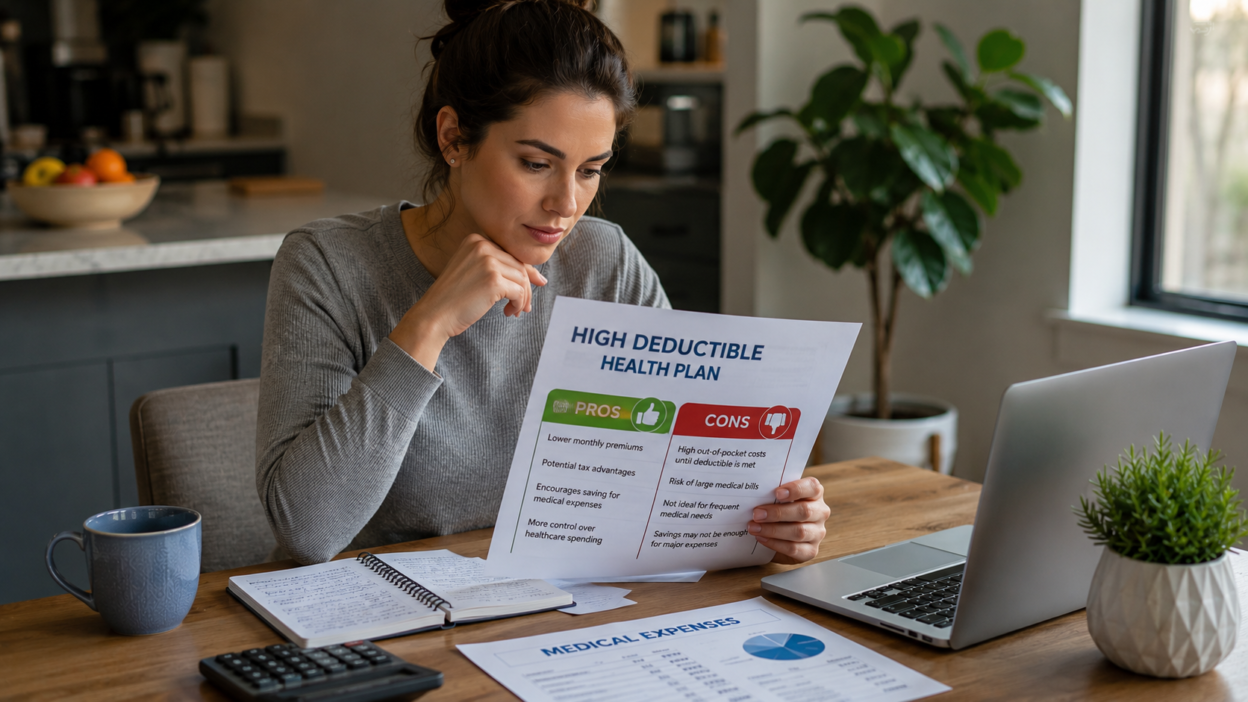
Considering a High Deductible Health Plan can be a significant decision for anyone evaluating their healthcare options. These plans offer lower monthly premiums but come with higher out-of-pocket costs when seeking medical care. Therefore, it’s essential to weigh the benefits and drawbacks before selecting the right healthcare strategy for you. By understanding the financial implications, potential savings, and coverage limitations, you can make a more informed choice. In this article, we’ll explore eight important pros and cons of enrolling in a High Deductible Health Plan, helping you determine if it aligns with your health needs and financial situation.
Key Points
- Low monthly premiums are appealing, but they can lead to high out-of-pocket costs.
- A High Deductible Health Plan can pair with Health Savings Accounts (HSAs) to save on taxes.
- Preventive services are often covered without a deductible.
- These plans may discourage frivolous healthcare use, promoting cost-conscious behaviour.
- However, high deductibles may make necessary care unaffordable for some individuals.
- Available coverage options vary, which could affect your choice.
- Ideal candidates tend to be young, healthy, or those with minimal medical expenses.
- It’s crucial to assess your medical history and expected healthcare needs before enrolling.
Related content:
Small Business Health Insurance: 9 Essential Decisions for Employers
Understanding High Deductible Health Plans: A Comprehensive Overview
High Deductible Health Plans (HDHPs) present a unique approach to health insurance, combining lower premiums with higher deductibles. These plans may appeal to many for their potential cost savings; however, they require careful consideration and understanding. Patients often face higher out-of-pocket expenses before insurance coverage kicks in, which can be a double-edged sword, especially during unexpected health events.
When evaluating an HDHP, consider the following:
- Deductible: The amount you pay before your insurer starts covering costs.
- Premium: The monthly cost you pay for having the insurance coverage.
- Health Savings Accounts: These accounts allow you to save money tax-free to cover medical expenses.
In conclusion, while a High Deductible Health Plan can offer lower premium rates, individuals need to assess their health needs and financial situations carefully. This balance ensures you select a plan that aligns with your lifestyle, creating a more holistic approach to your healthcare investment.
The Financial Upside: How High Deductible Plans Can Lower Your Premiums
Choosing a health insurance plan is often a delicate balancing act between premiums and out-of-pocket costs. A High Deductible Health Plan (HDHP) can offer a compelling financial upside by significantly lowering your monthly premiums. This reduction can free up funds for other essential expenses, making it an attractive option for many. However, it’s crucial to remember that while premiums are lower, the deductibles tend to be higher, which may lead to notable costs if unexpected medical care arises.
Therefore, if you are generally healthy and less likely to require frequent medical visits, an HDHP could be a savvy choice. Nevertheless, the potential savings come with a certain level of risk, as one major medical event could result in higher upfront costs. Ultimately, individuals should weigh their health needs against these nuances before choosing the right plan.
Potential Drawbacks: What You Need to Know About High Deductible Health Plans
While High Deductible Health Plans (HDHPs) offer lower premiums, there are several potential drawbacks to consider. For instance, the considerable out-of-pocket costs might strain your finances, especially if unexpected medical issues arise. This can lead to a situation where individuals delay necessary care because of cost concerns, ultimately complicating their health outcomes.
Furthermore, with HDHPs, the health savings accounts can provide some relief, yet they require careful planning and saving beforehand. Some subscribers may find themselves inadequately prepared for the high initial payments for services, which could be daunting. Therefore, it’s crucial to evaluate your financial situation and healthcare needs before committing to an HDHP. While it may seem appealing, understanding the complexities and potential risks associated with a High Deductible Health Plan is essential to making an informed choice. Ultimately, this approach may not suit everyone’s lifestyle or health situation, making careful consideration vital.
In conclusion, despite the benefits of lower premiums, weighing the disadvantages remains important when thinking of a High Deductible Health Plan.
Is a Health Savings Account Right for You? Exploring ADD Benefits
Health Savings Accounts (HSAs) offer unique advantages, especially for those navigating the complexities of a diagnosis like ADD. One key feature of HSAs is their compatibility with a High Deductible Health Plan, allowing users to save on taxes while setting aside funds for medical expenses. This flexibility can be particularly beneficial if you have recurring costs related to ADD management, such as therapy or medication.
However, deciding if an HSA is right for you requires careful consideration of your current health needs and financial situation. For instance, think about:
- Your medical expenses: Regular appointments and treatments can accumulate costs.
- Your tax situation: Contributions to HSAs can reduce taxable income, offering potential savings.
- Your savings habits: Are you comfortable setting aside funds for future healthcare needs?
In conclusion, while HSAs linked to a High Deductible Health Plan can be advantageous, it’s crucial to assess whether they align with your individual requirements and lifestyle.
Navigating Out-of-Pocket Costs: Budgeting for a High Deductible Plan
Managing out-of-pocket expenses can feel overwhelming, especially under a High Deductible Health Plan. These plans often come with lower premiums but higher deductibles, meaning you’ll need to budget carefully for potential medical costs. First, consider your typical healthcare needs; this can guide you in estimating your annual expenses. Additionally, keep in mind that some services may be exempt from the deductible, allowing you to access essential care without significant costs upfront. Furthermore, it’s a good idea to set aside a health-specific savings fund. You might not require it, yet having that cushion can provide peace of mind. Remember, while a High Deductible Health Plan can save you on monthly premiums, the true savings often depend on how well you prepare for unexpected medical events. Therefore, approach your budget with a proactive mindset to navigate potential out-of-pocket costs more effectively.
The Impact of Telehealth on High Deductible Health Plans
Telehealth is reshaping the landscape of healthcare delivery, particularly for those enrolled in a High Deductible Health Plan. These plans often require patients to meet substantial out-of-pocket expenses before insurance kicks in. As a result, access to affordable care becomes crucial. Telehealth has emerged as a viable solution, offering cost-effective consultations that can prevent unnecessary emergency room visits and hospital stays.
However, the effectiveness of telehealth in enhancing care under these plans isn’t always clear-cut. Some may question whether virtual visits provide the same quality of care as in-person appointments. Nevertheless, many patients find convenience and improved access to specialists that the traditional model lacks.
“In a rapidly evolving healthcare environment, embracing telehealth could redefine patient experience.”
Ultimately, by lowering costs and improving access, telehealth may not only benefit patients but also transform the viability of the High Deductible Health Plan framework.
When High Deductible Plans Make Sense: Ideal Candidates and Situations
Choosing a High Deductible Health Plan can be beneficial for specific individuals and scenarios. For example, those in good health with minimal medical needs may find that these plans fit well within their financial strategy. This is especially true for younger individuals or families who have a lower likelihood of frequent medical expenses.
Additionally, people with significant savings who can comfortably handle a higher upfront deductible may also benefit. On the other hand, those willing to invest in a Health Savings Account (HSA) can leverage tax advantages.
Consider the following situations where a High Deductible Health Plan might be ideal:
- Healthy Individuals: Lower monthly premiums compensate for the higher deductible.
- Families with Few Healthcare Needs: Reduced overall costs with infrequent doctor visits.
- Tax Savvy Consumers: Utilizing HSAs for additional savings benefits.
Still, it’s vital to assess your unique situation before committing.
Making the Most of Preventive Care: Maximizing Benefits with HDHPs
High Deductible Health Plans (HDHPs) offer a unique opportunity for individuals to engage actively in their healthcare while managing costs. Preventive care services, such as annual check-ups and vaccinations, are often covered before meeting the deductible. This means that taking advantage of these services can lead to significant long-term health benefits. Additionally, by scheduling regular visits, you can identify potential health issues early, ultimately reducing the need for more expensive treatments down the line.
However, the challenge lies in understanding which preventive services your plan covers. In my opinion, it’s essential to carefully review your policy or consult with your provider to navigate these benefits effectively. The proactive approach enabled by HDHPs not only fosters better health but also encourages careful management of healthcare spending, making it a win-win situation for those who take the time to explore their options.
The Role of Employer Contributions in Your High Deductible Health Plan
Employer contributions can significantly influence the effectiveness of your High Deductible Health Plan. These contributions may take the form of direct payments into a Health Savings Account (HSA) or premium support, which can ease the financial burden on employees. However, the specific impact depends on various factors, including the employer’s policies and the employee’s individual health needs.
Furthermore, employer contributions may encourage employees to take full advantage of the benefits offered by their High Deductible Health Plan. This can lead to a higher rate of preventive care utilisation, ultimately promoting better health outcomes. However, the effectiveness of these contributions can vary, potentially creating ambiguity in understanding their full value.
In my opinion, strategically leveraging employer contributions makes a High Deductible Health Plan not just a cost-saving measure but also a pathway to enhanced employee wellness.
Expert Tips for Managing Healthcare Expenses Under a High Deductible Plan
Navigating expenses under a High Deductible Health Plan can feel daunting, but there are strategies to ease the burden. Start by establishing a healthcare budget—this should include both expected and unexpected medical costs. By identifying regular expenses, you can anticipate financial needs more accurately.
In addition, consider setting up a Health Savings Account (HSA). This not only provides tax advantages but also allows you to save for future healthcare costs. Despite the initial out-of-pocket costs of a High Deductible Health Plan, leveraging an HSA offers a long-term financial cushion.
Finally, always compare prices for medical services. Costs can vary significantly even within the same geographical area. Therefore, take the time to seek out providers that offer transparent pricing, ensuring you’re getting the best possible value.
These tips can help you manage healthcare expenses more effectively, even under the constraints of a High Deductible Health Plan.
You can also check these out.:
High-Deductible Health Plans (HDHPs): What to Know
Conclusion
In navigating the complexities of healthcare options, a High Deductible Health Plan often presents both challenges and advantages. While it may seem daunting initially, many individuals find that with careful planning and budgeting, these plans can lead to significant overall savings, especially for those who are generally healthy. Therefore, taking the time to understand how to maximize the benefits of such plans can pay off in the long run. Moreover, considering factors like your healthcare needs and financial situation can help in making a more informed decision. Embracing this approach enables individuals to take control of their health expenses, leading to a more empowered and financially secure future.
Frequently Asked Questions
What is a High Deductible Health Plan (HDHP)?
A High Deductible Health Plan is a type of health insurance plan that features higher deductibles than traditional insurance plans. This means that you pay more out of pocket for healthcare costs before your insurance starts to pay.
What are the benefits of having an HDHP?
The main benefits of an HDHP include lower monthly premiums, the ability to contribute to a Health Savings Account (HSA), and potential tax savings. HDHPs are also beneficial for individuals who don’t expect to use a lot of medical services.
What is the minimum deductible for an HDHP?
For 2023, the minimum deductible for an individual HDHP is £1,600, and for family coverage, it is £3,200. These amounts can change annually based on inflation.
Can I use an HSA with an HDHP?
Yes, you can contribute to a Health Savings Account (HSA) if you are enrolled in a High Deductible Health Plan. An HSA allows you to save money tax-free for eligible medical expenses.
What are eligible expenses for an HSA?
Eligible expenses for an HSA include qualified medical expenses such as doctor visits, prescription medications, dental and vision care, and other health-related costs that are not covered by insurance.
What happens if I don’t meet my deductible?
If you don’t meet your deductible, you will be responsible for 100% of your healthcare costs (except for preventive services, which are usually covered at no cost) until you meet the deductible amount.
Are preventive services covered by HDHPs?
Yes, most High Deductible Health Plans cover preventive services, such as annual check-ups, vaccinations, and screenings, at no cost to you, even if you haven’t met your deductible.
Can I switch from a regular plan to an HDHP?
Yes, you can switch from a traditional health insurance plan to a High Deductible Health Plan, but you should review your healthcare needs and financial situation to ensure it’s the right choice for you.
What is the maximum out-of-pocket cost for an HDHP?
For 2023, the maximum out-of-pocket limit for an HDHP is £8,050 for an individual plan and £16,100 for a family plan. These limits include deductibles, copayments, and coinsurance.
Are there any downsides to having an HDHP?
Yes, the downsides of an HDHP include higher out-of-pocket costs before the deductible is met, which can be challenging for individuals with frequent healthcare needs or low savings.