Understanding the difference between Medicaid and Marketplace Insurance can significantly impact your health coverage choices. Both options serve distinct populations and offer various benefits, yet they operate under different eligibility requirements. Therefore, knowing these differences is crucial for making informed decisions about your healthcare. In this article, we will explore seven essential eligibility differences to help you navigate the complexities of Medicaid vs Marketplace Insurance.
Key Points
- Income thresholds vary significantly between Medicaid and Marketplace Insurance.
- Citizenship and residency requirements differ for each program.
- Medicaid often covers a broader range of services compared to Marketplace plans.
- Eligibility age limits may apply differently across both options.
- The application process for each type of insurance has unique procedures.
- Medicaid is state-operated, whereas Marketplace Insurance is federally regulated.
- Special enrollment periods are available only for certain circumstances in Marketplace Insurance.
Understanding Medicaid: Key Features and Benefits
Medicaid serves as a crucial safety net for individuals and families, providing essential healthcare coverage. Unlike private insurance plans, Medicaid often includes comprehensive services designed to accommodate those with limited income. Key features include:
- Eligibility: Typically determined by income and household size.
- Cost: Generally low or no premiums and minimal out-of-pocket costs.
- Services: Covers a range of medical services including hospital stays, doctor visits, and preventive care.
When considering Medicaid vs Marketplace Insurance, it’s important to weigh your options based on coverage, eligibility criteria, and potential costs. However, Medicaid’s accessibility makes it a vital resource for many, although some may find it lacks certain features available in marketplace plans. Ultimately, understanding these differences can help ensure you make informed healthcare decisions.
Marketplace Insurance Explained: What You Need to Know
Marketplace insurance offers a variety of plans designed to suit different needs and budgets. It’s essential to understand how these plans differ from traditional insurance, particularly when comparing Medicaid vs Marketplace Insurance. The marketplace typically provides more options, but eligibility criteria can be complex. Therefore, it’s wise to assess your circumstances carefully. Many individuals find that while marketplace plans offer flexibility, they may not always be the most economical choice for everyone.
Comparative Analysis: Income Requirements for Medicaid vs Marketplace
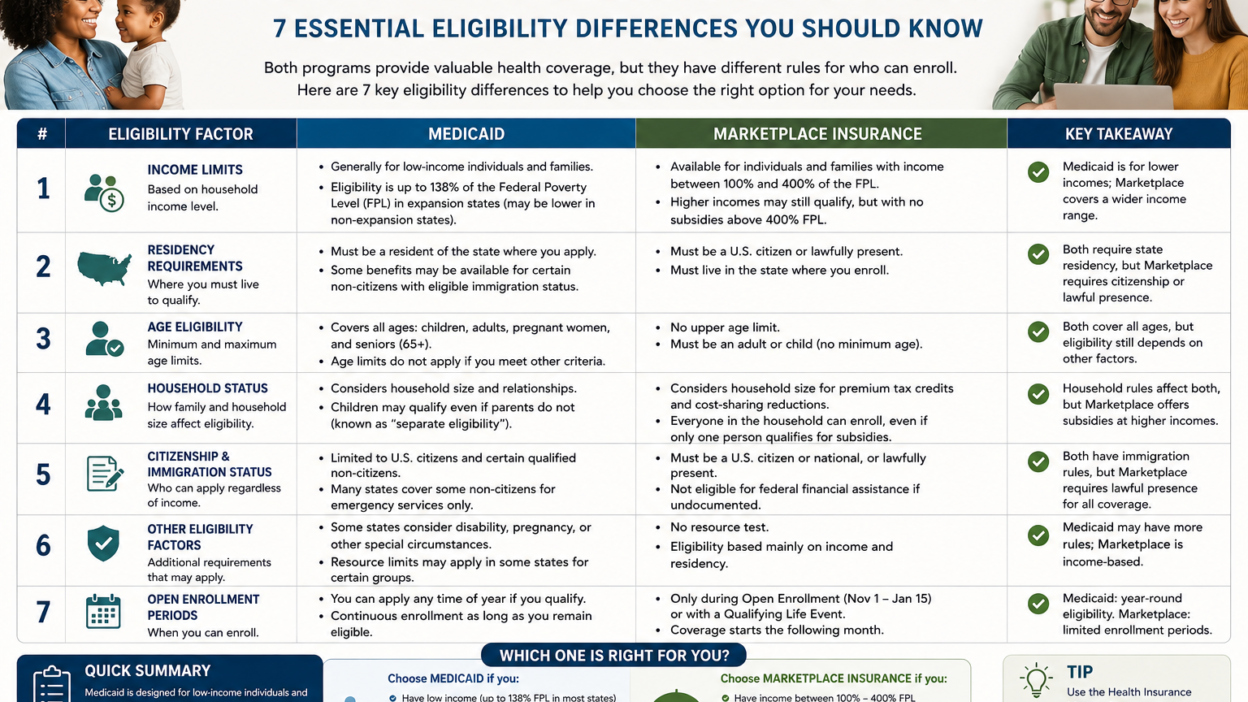
The Medicaid vs Marketplace Insurance landscape presents a complex array of income eligibility criteria. Generally, Medicaid offers coverage to individuals and families with lower incomes, typically under 138% of the Federal Poverty Level. In contrast, the Marketplace provides insurance options for those earning slightly higher incomes, between 100% and 400% of the poverty level. Therefore, understanding these distinctions is crucial when navigating health coverage choices, as individual circumstances may lead to different eligibility outcomes.
Key Takeaways
Ultimately, while both programs aim to enhance healthcare access, individuals must consider their specific financial situations to determine the most advantageous route within the Medicaid vs Marketplace Insurance model.
Choosing wisely can lead to better health outcomes and financial stability.
Eligibility Criteria: Age, Disability, and Family Status Impact
Understanding the eligibility criteria for health coverage is essential. Age plays a pivotal role, particularly for young adults and seniors. Disability can further refine eligibility, as many programs cater specifically to those with physical or mental health challenges. Family status, including the number of dependents, influences the scope of available benefits. Therefore, it’s crucial to examine Medicaid vs Marketplace Insurance options to find the best fit. Factors like income and household dynamics could also affect decision-making.
Application Process: How to Navigate Medicaid and Marketplace Enrollment
Navigating the application process for health coverage can be daunting. Understanding the key differences between Medicaid vs Marketplace Insurance is crucial. Start by determining your eligibility for Medicaid, which is often based on income and household size. In contrast, the Marketplace offers various plans suited for diverse needs. Collect necessary documents early to smooth out the process. Ultimately, the choice you make should reflect your unique situation, ensuring you receive the best coverage possible.
Financial Considerations: Premiums, Copays, and Out-of-Pocket Costs
Understanding the financial implications of healthcare options is crucial. Premiums vary significantly between Medicaid vs Marketplace Insurance plans, influencing monthly budgets. Copays can also differ; while some may offer lower fees at doctor visits, others might have higher out-of-pocket costs. Therefore, assessing the total financial impact of these plans is essential. As one healthcare expert noted,
“Choosing the right insurance often hinges on personal circumstances and financial capabilities.”
Navigating these decisions can be complex but beneficial.
Choosing the Right Plan: Factors to Consider When Selecting Between Medicaid and Marketplace Insurance
When deciding between Medicaid vs Marketplace Insurance, it’s essential to evaluate several factors that may influence your choice. Firstly, consider your income level and household size, as these can determine eligibility for Medicaid. Secondly, think about your healthcare needs—do you require frequent medical attention or specialised services? Lastly, examine the cost structures; premiums, copayments, and overall out-of-pocket expenses vary significantly. By weighing these aspects, you can make a more informed decision.
- Eligibility: Understand which plan you qualify for based on income and family situation.
- Healthcare Needs: Assess the frequency and type of medical services you require.
- Costs: Compare premiums, deductibles, and out-of-pocket limits to find what fits best.
Ultimately, both options offer distinct advantages, and knowing the details of Medicaid vs Marketplace Insurance can help you choose wisely.
Conclusion
In summary, understanding the nuances of Medicaid vs Marketplace Insurance can empower you to make more informed decisions about your healthcare coverage. Both options offer unique benefits tailored to different needs, and recognizing these differences can help ensure you choose the right fit for your situation. As you weigh your options, consider your eligibility, healthcare needs, and budget. Ultimately, having the right insurance can greatly impact your well-being and financial stability. Therefore, take the time to explore your choices and find a plan that best supports your healthcare journey.
Frequently Asked Questions
What is the main difference between Medicaid and Marketplace insurance?
The main difference is that Medicaid is a state and federally funded programme that provides free or low-cost healthcare for eligible low-income individuals and families, whereas Marketplace insurance plans are offered by private companies and are available for purchase by individuals, typically with subsidies based on income.
Who is eligible for Medicaid?
Eligibility for Medicaid varies by state but generally includes low-income families, pregnant women, children, elderly individuals, and those with disabilities. To qualify, individuals must meet both income and residency requirements.
Can I have both Medicaid and Marketplace insurance?
It is possible to be eligible for both Medicaid and Marketplace insurance, but typically, if you qualify for Medicaid, you will not need to buy a Marketplace plan since Medicaid provides comprehensive coverage at little to no cost.
How do I apply for Medicaid?
You can apply for Medicaid through your state’s Medicaid agency, either online, by phone, or in person. You will usually need to provide information about your income, household size, and other relevant details.
Are the costs associated with Marketplace insurance higher than Medicaid?
Yes, typically, Marketplace insurance costs are higher than Medicaid because Medicaid is designed to provide low-cost or no-cost coverage for eligible individuals. Marketplace plans may have premiums, deductibles, and co-pays, but subsidies can help lower these costs based on income.