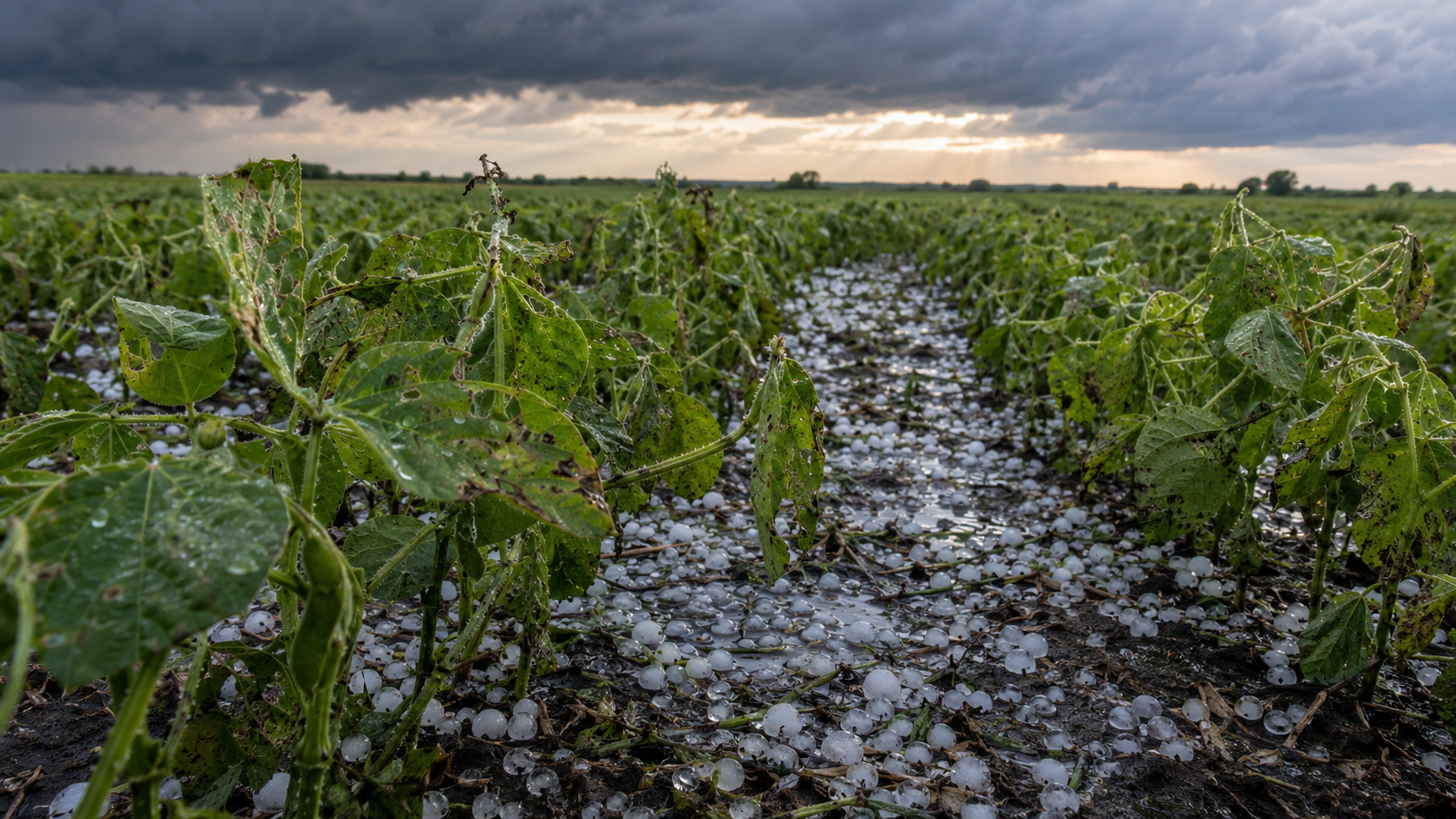
A single hailstorm can damage one part of a field while leaving nearby acres almost untouched. That highly localized pattern is one reason many U.S. producers consider crop-hail insurance even when they already carry federal crop insurance.
Crop-hail insurance is a privately sold, state-regulated product designed primarily to protect crops against physical damage caused by hail. Some policies also cover fire or offer endorsements for additional named risks. Unlike federal Multiple Peril Crop Insurance, commonly called MPCI, crop-hail insurance is generally built around a selected dollar amount of protection per acre.
Understanding the policy’s deductible, covered perils, loss-adjustment method and reporting requirements is essential before purchasing coverage.
Key Takeaways
- Crop-hail insurance is sold by private insurers and regulated by state insurance departments.
- It generally provides a selected dollar amount of coverage per acre.
- Hail is the primary covered peril, but fire and other risks may be included or added depending on the policy.
- Crop-hail insurance is not federally subsidized.
- Producers can often insure selected crops or acres instead of covering their entire operation.
- A claim is normally based on the percentage of physical crop damage determined by an adjuster.
- Coverage, deductibles, deadlines and claim formulas vary by state, crop and insurance company.
- Producers should report suspected damage promptly and avoid destroying or harvesting the affected crop before receiving instructions.
What Is Crop-Hail Insurance?
Crop-hail insurance is a named-peril insurance product. Instead of protecting against a broad group of production and revenue risks, it focuses on specific causes of physical crop damage listed in the policy.
The National Association of Insurance Commissioners explains that crop-hail coverage is offered through the private insurance market, regulated by state insurance departments and not reinsured by the Federal Crop Insurance Corporation.
A producer typically chooses a dollar amount of coverage for each insured acre. If a covered event damages the crop, an adjuster evaluates the loss according to the policy’s approved procedures. The payment is then calculated using factors such as:
- Insured acres
- Coverage per acre
- Adjusted percentage of damage
- Applicable deductible
- Policy limits
- Previous losses that may have reduced the remaining coverage
Crop-hail insurance is frequently used alongside MPCI, but the two policies are separate contracts.
Crop-Hail Insurance vs. MPCI
Both products may respond to hail damage, but they measure and insure risk differently.
| Feature | Crop-Hail Insurance | Federal MPCI |
|---|---|---|
| Market | Private insurance market | Federal crop insurance program |
| Regulation | State insurance departments | USDA Risk Management Agency |
| Primary purpose | Protection against listed perils such as hail | Protection against multiple production or revenue risks |
| Premium subsidy | Generally no federal subsidy | Federal premium subsidies are available |
| Coverage structure | Commonly a dollar amount per acre | Based on yield, revenue or another approved insurance plan |
| Area insured | Selected acres may be eligible | Insurable acreage and unit rules apply |
| Purchase timing | Often available during the growing season | Must be purchased by the applicable sales closing date |
| Loss measurement | Physical damage percentage and policy terms | Production, revenue or plan-specific loss calculation |
MPCI may cover hail as an insured cause of loss, but an isolated storm may not reduce the total production of an insured unit enough to trigger an MPCI indemnity.
Crop-hail coverage can address that gap because it may respond to physical damage on the specific insured acreage. This does not guarantee payment: the damage must meet the private policy’s definitions, deductible and adjustment rules.
What Does Crop-Hail Insurance Cover?
The answer depends on the policy issued in the producer’s state. The declarations page, policy form, endorsements and state-specific provisions determine the actual coverage.
Hail Damage
The central purpose of the policy is to cover direct physical damage caused by hail.
Examples may include:
- Defoliation
- Broken or severed plants
- Bruised fruit
- Damaged pods, heads or ears
- Lost grain or seed
- Reduced productive plant population
- Damage that prevents the crop from reaching its expected value
The effect of hail depends heavily on the crop and its stage of growth. Similar-looking damage can produce very different yield outcomes depending on whether it occurs during early vegetative growth, pollination, grain fill or maturity.
Fire
Many crop-hail policies include fire as a covered peril or make it available through policy provisions or endorsements. Producers should verify whether fire coverage applies automatically and whether any exclusions affect crops located near stubble, residue or other higher-risk areas.
Additional Perils and Endorsements
Some insurers offer optional protection for risks such as:
- Lightning
- Wind
- Vandalism
- Malicious mischief
- Theft
- Transit losses
- Extra harvest expense
- Stored grain
- Certain losses involving temporary storage
These features are not standard across every crop-hail policy. Availability may depend on the state, crop, insurer and selected plan.
The safest approach is to treat every additional peril as excluded unless it is clearly listed in the policy or an attached endorsement.
What Crop-Hail Insurance Usually Does Not Cover
Crop-hail insurance is not a substitute for complete farm or crop risk management. It generally does not cover every event that can reduce production.
Depending on the contract, exclusions may include:
- Drought
- Excessive moisture
- Flooding
- Freeze
- Plant disease
- Insect damage
- Poor farming practices
- Failure to control weeds or pests
- Normal deterioration
- Price declines
- Pre-existing crop damage
- Damage occurring before coverage begins
- Losses reported outside the policy deadline
- Farm buildings, equipment and liability exposures
Farm property, machinery, barns and general liability normally require separate farm insurance. Broad production or revenue losses may require an appropriate federal crop insurance plan.
How Crop-Hail Coverage Is Structured
Many crop-hail policies use a dollar-per-acre structure.
For example, a producer might select $400 of coverage per acre on an eligible crop. That amount represents the maximum policy liability per insured acre before deductibles, loss percentages, limits and previous indemnities are considered.
It does not mean every hail event produces a $400 payment.
Dollar Plans
A dollar plan assigns a specific amount of coverage to each insured acre. The adjusted percentage of damage is applied according to the policy’s loss calculation and deductible structure.
This format can be useful when the producer wants to protect a defined crop value or a portion of the investment in the field.
Companion Plans
A companion plan is designed to work alongside an MPCI policy. It may help protect part of the risk that sits below the MPCI guarantee or deductible.
The precise relationship between the two policies varies, so producers should ask their agent to show how a hail loss would be handled under both contracts.
Production-Based Plans
Some private products connect coverage more closely to production history, harvested yield or an existing MPCI guarantee. These plans may combine an adjusted hail-damage percentage with production information.
Product names and formulas differ among insurers. Producers should request a written example using their own acres, crop and MPCI coverage level.
Understanding Crop-Hail Deductibles
The deductible controls how much damage the insured retains before the policy pays. A higher deductible may reduce the premium, but it also increases the portion of a loss the producer must absorb.
Common structures may include:
- No-deductible coverage
- Straight deductibles
- Disappearing deductibles
- Franchise-style provisions
- Companion deductibles
- Crop- or state-specific loss tables
A “10% deductible” does not always mean the insurer simply subtracts ten percentage points from every adjusted loss. Some policies use loss tables or formulas that change how the deductible applies as damage becomes more severe.
Before purchasing coverage, ask the agent for claim illustrations showing:
- A small loss
- A moderate loss
- A severe loss
- A second hailstorm after an earlier claim
- Damage confined to only part of a field
How a Crop-Hail Payment May Be Calculated
Consider a simplified hypothetical example:
- Insured acreage: 100 acres
- Coverage: $300 per acre
- Adjusted hail damage: 25%
- Assumed payable damage after the policy’s deductible: 15%
A basic illustration would be:
100 acres × $300 per acre × 15% payable damage = $4,500
This is an educational example, not a universal claim formula. An actual settlement may differ because of policy loss tables, minimum-loss provisions, crop stage, salvage value, previous claims, unit definitions and endorsements.
The percentage visible immediately after the storm may also differ from the final adjusted percentage. Adjusters use crop-specific procedures rather than relying only on appearance.
How Much Does Crop-Hail Insurance Cost?
There is no reliable national flat price for crop-hail insurance. Premiums are calculated from the risk attached to a particular crop, location and policy design.
Important rating factors may include:
- State and county
- Historical hail frequency
- Crop type
- Coverage amount per acre
- Insured acreage
- Selected deductible
- Policy form
- Optional endorsements
- Length of exposure
- Loss experience and approved rating data
A high-value specialty crop in a hail-prone area may have a very different rate from field corn in a lower-risk county.
Crop-hail premiums are generally not subsidized by the federal government. The producer normally pays the private-market premium established for the selected coverage.
How to Compare Quotes
Do not compare crop-hail quotes using premium alone. Compare the complete contract.
Request the following information from each agent:
- Premium per acre
- Coverage per acre
- Deductible type
- Minimum payable loss
- Covered perils
- Important exclusions
- Cancellation terms
- Claim-reporting deadline
- Loss-adjustment method
- Available endorsements
- How previous claims reduce remaining coverage
- How the policy coordinates with MPCI
A less expensive policy may contain a larger deductible, narrower coverage or a less favorable settlement formula.
Can Crop-Hail Insurance Be Purchased After Planting?
Crop-hail insurance is often more flexible than MPCI. According to the NAIC, private crop-hail coverage may be available during the growing season.
However, coverage cannot normally be purchased after known damage and then used for that existing loss. The insurer may require an application, acreage information, premium payment or confirmation that the crop is undamaged before coverage attaches.
The effective time and date should appear in the policy documents or binder. Do not assume coverage begins the moment an application is discussed with an agent.
Some products may have crop-specific or seasonal purchase deadlines. Availability can also change after a major storm or when a crop approaches harvest.
How to File a Crop-Hail Insurance Claim
Claim requirements vary, but the following process is generally appropriate.
1. Report the Damage Promptly
Contact the insurance agent or insurer as soon as hail damage is suspected. Follow the policy’s notice instructions and reporting deadline.
Provide:
- Policy number
- Date and approximate time of the storm
- Crop and affected acreage
- Field location
- Initial description of damage
- Contact information
- Information about any urgent harvest or replanting decision
Keep a record of when the claim was reported and the person who received the notice.
2. Protect the Crop From Further Damage
Take reasonable steps to prevent avoidable additional loss when it is safe and practical. Do not make major changes that could interfere with the insurer’s inspection.