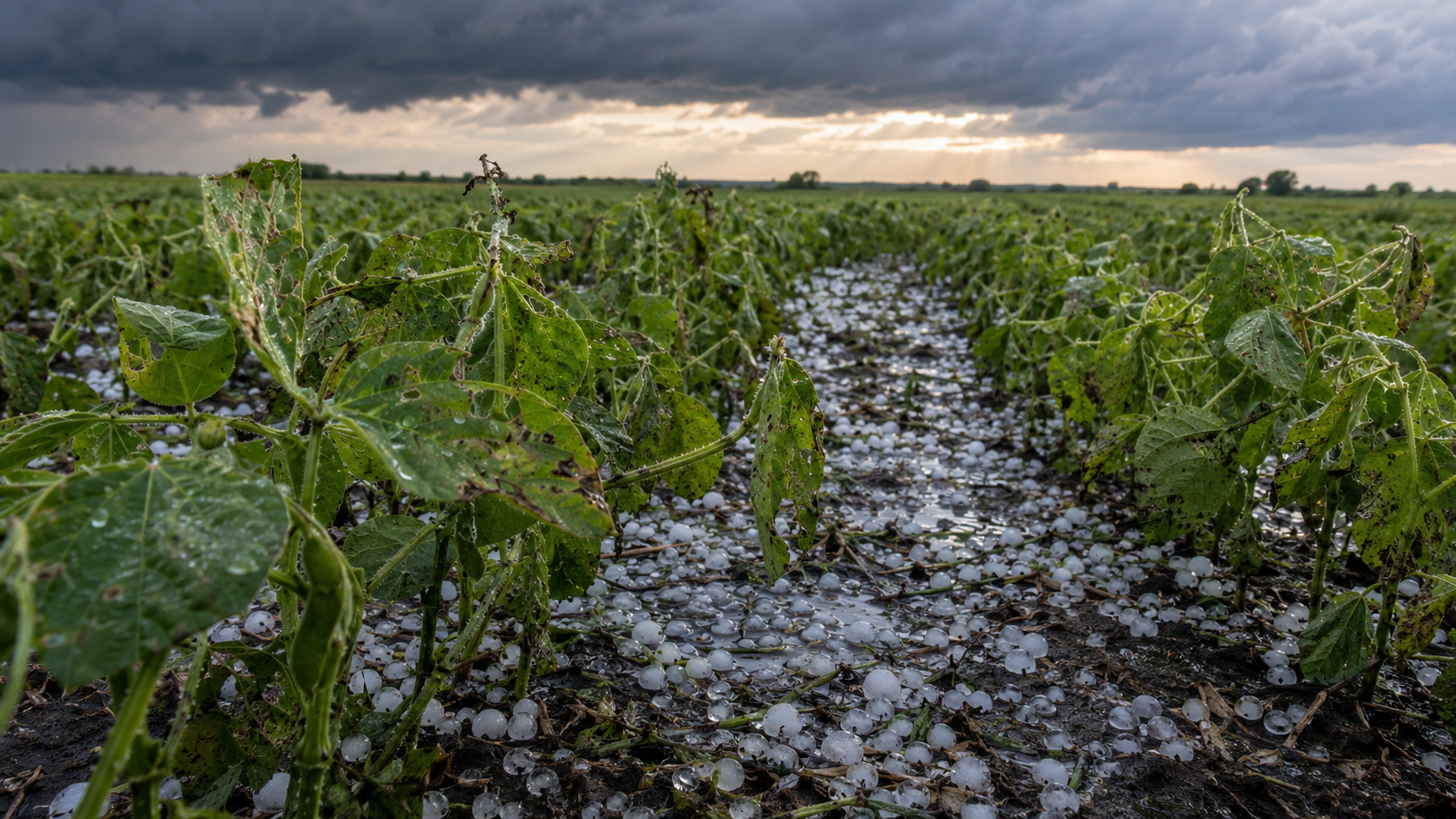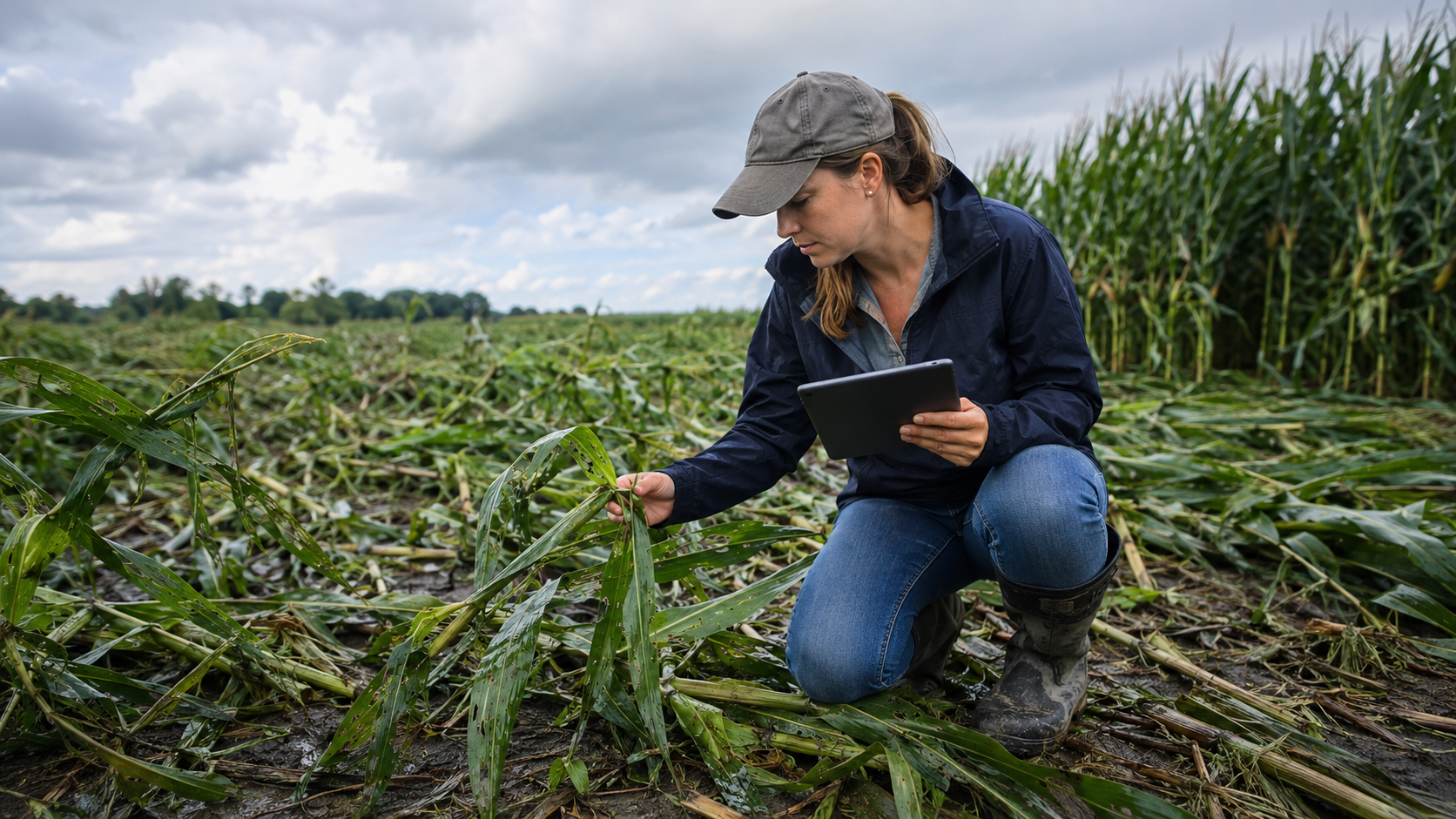
Multi-peril crop insurance protects eligible crops against several unavoidable causes of loss under one policy. Depending on the crop and selected plan, coverage may respond to drought, excessive moisture, hail, wind, frost, certain diseases, insect damage and other natural risks specified in the policy.
Multi-Peril Crop Insurance is commonly abbreviated as MPCI. In the United States, the term generally refers to federally supported crop insurance delivered through private insurance agents and approved insurance providers under rules administered by the USDA Risk Management Agency.
MPCI should not be interpreted as protection against every possible event. Each policy contains specific insured causes, exclusions, deadlines and farming requirements.
Key Takeaways
- MPCI can protect eligible crops against multiple natural causes of loss.
- Coverage may protect crop yield, crop revenue or both.
- Policies are sold by licensed private agents and administered under federal crop insurance rules.
- Available plans vary by crop, county and production practice.
- Farmers must apply before the applicable sales closing date.
- A low yield does not automatically qualify for payment.
- Losses caused by poor management or failure to follow good farming practices are generally excluded.
- Crop damage should be reported promptly and before the crop is destroyed or put to another use.
How Multi-Peril Crop Insurance Works
MPCI transfers part of a farm’s crop production or revenue risk to an insurance provider.
The producer selects an available insurance plan, coverage level and unit structure. The insurance provider uses production records, acreage, projected prices and USDA actuarial information to calculate the guarantee and premium.
If a covered event causes production or revenue to fall below the insured guarantee, the policy may pay an indemnity.
The basic process includes:
- Selecting an eligible crop and insurance plan
- Applying before the sales closing date
- Reporting production history
- Reporting planted acreage
- Paying the producer’s share of the premium
- Following recognized good farming practices
- Reporting suspected crop damage
- Allowing a loss adjuster to inspect the crop
- Submitting production and claim records
- Receiving an indemnity when a covered loss exceeds the deductible
Coverage and claim calculations depend on the applicable policy rather than the general MPCI label.
Who Administers MPCI?
The federal crop insurance program operates through a public-private partnership.
The Federal Crop Insurance Corporation administers the federal program. The USDA Risk Management Agency manages program rules, premium rates, approved products, subsidies and reinsurance arrangements.
Farmers normally purchase policies from licensed private crop insurance agents. Approved private insurance providers issue and service the policies, collect premiums, process acreage reports and adjust claims.
The policy terms for federally supported coverage are established under federal program rules. An agent cannot independently add an excluded cause of loss or change a federally determined premium rate.
What Does Multi-Peril Crop Insurance Cover?
Covered causes vary by crop and policy. Common insured causes can include:
- Drought
- Excessive moisture
- Flood
- Hail
- Wind
- Frost
- Freeze
- Natural fire
- Certain insect damage
- Certain plant diseases
- Failure of irrigation water supply caused by an insured event
- Wildlife damage when included
- Prevented planting when available
- Replanting costs when included
Revenue-based plans may also protect against a qualifying decline in the applicable harvest price.
A cause appearing on a general list is not guaranteed to be covered for every crop. Producers must review the Basic Provisions, Crop Provisions, Special Provisions and endorsements applicable to their policy.
What Does MPCI Not Cover?
MPCI is designed for unavoidable covered losses. It does not compensate producers for every disappointing harvest.
Common exclusions can include:
- Poor farm management
- Failure to follow good farming practices
- Neglect
- Intentional damage
- Failure to control weeds
- Failure to control insects or disease when effective measures are available
- Inadequate irrigation not caused by an insured event
- Planting outside applicable deadlines
- Using an unapproved production practice
- Damage occurring before coverage attaches
- Losses occurring after the insurance period ends
- Failure to report acreage accurately
- Failure to report damage on time
- Ordinary commodity price changes under yield-only coverage
- Damage to barns, machinery or vehicles
- General farm liability claims
The policy does not guarantee farm profitability or cover every production expense.
Yield Protection
Yield Protection covers a qualifying reduction in crop yield caused by an insured event.
The guarantee is generally based on:
- Approved yield
- Selected coverage level
- Insured acreage
- Producer’s ownership share
- Applicable price
Suppose a corn producer has an approved yield of 180 bushels per acre and selects 75% coverage.
The yield guarantee would generally be:
180 × 75% = 135 bushels per acre
If verified production falls below 135 bushels because of a covered cause, the producer may qualify for an indemnity.
The payment depends on the actual production, insured price, acreage, share and policy calculation.
Yield Protection does not ordinarily pay solely because the market price falls.
Revenue Protection
Revenue Protection covers qualifying revenue losses caused by:
- Reduced yield
- A decline from the projected price to the harvest price
- A combination of yield and price changes
The guarantee is initially calculated using the projected price. Standard Revenue Protection may increase the guarantee when the harvest price is higher, subject to policy rules.
This feature can help when production falls during a year of rising commodity prices.
Revenue Protection is not the same as profit insurance. It does not directly reimburse fuel, fertilizer, rent, labor or other production expenses.
Revenue Protection With Harvest Price Exclusion
Revenue Protection with Harvest Price Exclusion is commonly abbreviated as RP-HPE.
It provides revenue protection using the projected price. Unlike standard Revenue Protection, the guarantee does not increase when the harvest price is higher than the projected price.
RP-HPE may cost less than standard Revenue Protection, but it leaves the producer with more exposure when yields decline while commodity prices rise.
Actual Production History Coverage
Actual Production History, or APH, is used to establish an approved yield for many individual crop policies.
The producer supplies acceptable historical production records. The insurance provider uses those records and applicable RMA procedures to calculate the approved yield.
Records may include:
- Harvest records
- Settlement sheets
- Scale tickets
- Storage records
- Farm management records
- Production summaries
- Other verifiable yield documents
Accurate records are essential. Incorrect or unsupported production information can change the guarantee and may create claim or compliance problems.
Area-Based Coverage
Some federal crop insurance plans use county results rather than the individual farm’s actual production.
Area Risk Protection Insurance may protect against widespread county-level yield or revenue losses.
The producer’s individual farm can suffer significant damage without receiving an indemnity if the county result does not trigger the policy. The opposite can also occur: a payment may be triggered even when the individual farm performs relatively well.
This difference is known as basis risk.
Area coverage should not be purchased under the assumption that an adjuster will calculate only the individual farm’s crop loss.
Catastrophic Risk Protection
Catastrophic Risk Protection is commonly called CAT coverage.
For applicable individual yield policies, the current federal CAT endorsement generally provides protection equal to 50% of the approved yield, indemnified at 55% of the applicable price election or projected price.
This means CAT coverage protects only a portion of the expected crop value.
The federal government generally subsidizes the CAT premium, but an administrative fee may apply unless the producer qualifies for a waiver.
CAT is designed for severe losses. Farmers wanting protection against smaller losses generally choose additional, or buy-up, coverage.
Buy-Up Coverage
Buy-up coverage provides protection above the CAT level.
Depending on availability, producers may select coverage in increments such as:
- 50%
- 55%
- 60%
- 65%
- 70%
- 75%
- 80%
- 85%
Higher coverage reduces the producer’s deductible but generally increases the farmer-paid premium.
For example:
| Coverage Level | Producer Deductible |
|---|---|
| 65% | 35% |
| 70% | 30% |
| 75% | 25% |
| 80% | 20% |
| 85% | 15% |
The deductible is the portion of the expected yield or revenue not protected by the underlying coverage.
MPCI vs. Crop-Hail Insurance
MPCI and crop-hail insurance are different products.
| Feature | MPCI | Crop-Hail Insurance |
| Main purpose | Multiple covered production or revenue risks | Primarily hail and listed private risks |
| Federal support | Generally federally supported | Privately underwritten |
| Purchase deadline | Fixed sales closing date | Often available later in the season |
| Coverage basis | Yield, revenue or area results | Commonly field- or acre-based damage |
| Premium subsidy | Available for eligible policies | Generally not federally subsidized |
| Coverage scope | Multiple specified causes | Narrower list of specified risks |
A farmer may carry both policies. Policy coordination is important to avoid misunderstanding how a loss will be adjusted.
MPCI vs. Farm Insurance
MPCI protects eligible crops or crop revenue. Farm insurance protects physical property and liability exposures.
MPCI generally does not insure:
- Farmhouses
- Barns
- Grain bins
- Tractors
- Combines
- Farm vehicles
- Livestock mortality
- Visitor injuries
- Product liability
Those risks require farm property, liability, vehicle, livestock or specialized insurance.
Which Crops Are Eligible?
RMA provides insurance programs for more than 100 crops, but every program is not available in every county.
Insurable commodities may include:
- Corn
- Soybeans
- Wheat
- Cotton
- Rice
- Barley
- Grain sorghum
- Peanuts
- Fruits
- Vegetables
- Nursery crops
- Forage
- Hemp
- Specialty crops
Availability can depend on:
- State
- County
- Crop
- Crop type
- Intended use
- Irrigation practice
- Organic or conventional production
- Planting date
- Approved production method
Producers can check RMA’s County Crop Programs and actuarial documents or contact a licensed agent.
What If a Crop Is Not Insurable?
The USDA Farm Service Agency administers the Noninsured Crop Disaster Assistance Program, commonly called NAP.
NAP can provide financial assistance for eligible crops when permanent federal crop insurance is not available and a qualifying natural disaster causes low yields, inventory loss or prevented planting.
NAP is not an MPCI policy. It has separate eligibility rules, application deadlines, fees, reporting requirements and payment calculations.
A producer should check availability before planting rather than waiting until damage occurs.
How Much Does MPCI Cost?
There is no standard MPCI price per acre.
Premiums depend on:
- Crop
- County
- Approved yield
- Projected price
- Coverage level
- Insurance plan
- Unit structure
- Production practice
- Historical loss risk
- Options and endorsements
- Federal premium subsidy
Higher coverage levels usually increase premiums. Enterprise units may receive higher subsidy rates and premium discounts than smaller unit structures.
Farmers should compare producer-paid premiums—not only total premiums before federal support.
What Is a Crop Insurance Unit?
A unit groups insured acreage for premium and claim calculations.
Common structures include:
Enterprise Units
Enterprise units combine eligible acreage of an insured crop across a county. They often receive favorable premium support because losses are spread across a larger geographic area.
Basic Units
Basic units generally separate acreage according to ownership arrangements, such as owned land and crop-share leases.
Optional Units
Optional units can divide qualifying acreage into smaller units. They may provide more localized protection but often cost more.
A storm damaging one tract may produce different claim results depending on whether that tract is insured separately or combined with undamaged acreage.
When Must MPCI Be Purchased?
A producer must apply by the sales closing date for the crop and county.
Sales closing dates vary according to:
- Crop
- Location
- Planting season
- Insurance plan
- Policy year
Applications submitted after the deadline generally are not accepted for that insurance cycle.
Existing policies commonly renew automatically, but changes to coverage must usually be made by the applicable sales closing date.
Other important dates include:
- Cancellation date
- Earliest planting date
- Final planting date
- Acreage reporting date
- Premium billing date
- Production reporting date
- End of insurance period
Missing a deadline can reduce or eliminate coverage.
What Are Good Farming Practices?
Federal crop insurance requires producers to follow recognized good farming practices.
These are production methods that allow the insured crop to make normal progress toward maturity and produce its expected yield.
Practices can involve:
- Seed selection
- Planting methods
- Fertilization
- Irrigation
- Weed control
- Pest management
- Disease management
- Harvest timing
- Crop rotation
- Other agronomic decisions
A loss caused by failure to follow recognized good farming practices is generally not covered.
When uncertain, producers should obtain guidance from agricultural experts and maintain documentation supporting their decisions.
How to File an MPCI Claim
A farmer should contact the crop insurance agent immediately after discovering possible damage.
RMA’s general insurance cycle states that notice is typically required within 72 hours after initial discovery of damage or loss and no later than 15 days after the end of the insurance period, unless the policy specifies otherwise.
After notice:
- The insurance provider records the potential loss.
- A loss adjuster may inspect the crop.
- The producer supplies acreage and production records.
- The adjuster determines the cause and extent of damage.
- Remaining production may be appraised.
- The insurer calculates whether an indemnity is due.
The farmer should not destroy, abandon, replant or put damaged acreage to another use without first discussing it with the insurance provider.
Documents Needed for a Claim
Useful records may include:
- Insurance policy documents
- Acreage reports
- Planting records
- Production history
- Harvest records
- Scale tickets
- Sales records
- Input receipts
- Farm maps
- Photographs
- Weather records
- Storage records
- Ownership or lease documents
Records should be separated by crop, county, unit and policy year when required.
Common Reasons Claims Are Reduced or Denied
An MPCI claim may be reduced or denied because:
- The cause of loss is excluded.
- Damage was reported late.
- Acreage was reported incorrectly.
- Production records are missing.
- The crop was planted after applicable deadlines.
- The crop was not insured for its actual use.
- Good farming practices were not followed.
- The crop was destroyed before inspection.
- Harvested production was not properly documented.
- The loss did not exceed the deductible.
- Coverage had not attached.
- The insurance period had ended.
Producers should read policy documents before a loss occurs.
Is MPCI Worth It?
MPCI may be valuable when crop revenue is essential to paying:
- Operating loans
- Land rent
- Equipment payments
- Input costs
- Payroll
- Family living expenses
- Long-term farm debt
The decision should consider the producer-paid premium, insured guarantee, deductible, available financial reserves and farm-specific risk.
A policy with the lowest premium may leave too much exposure. The highest coverage level may not always provide the best value. Comparing several